


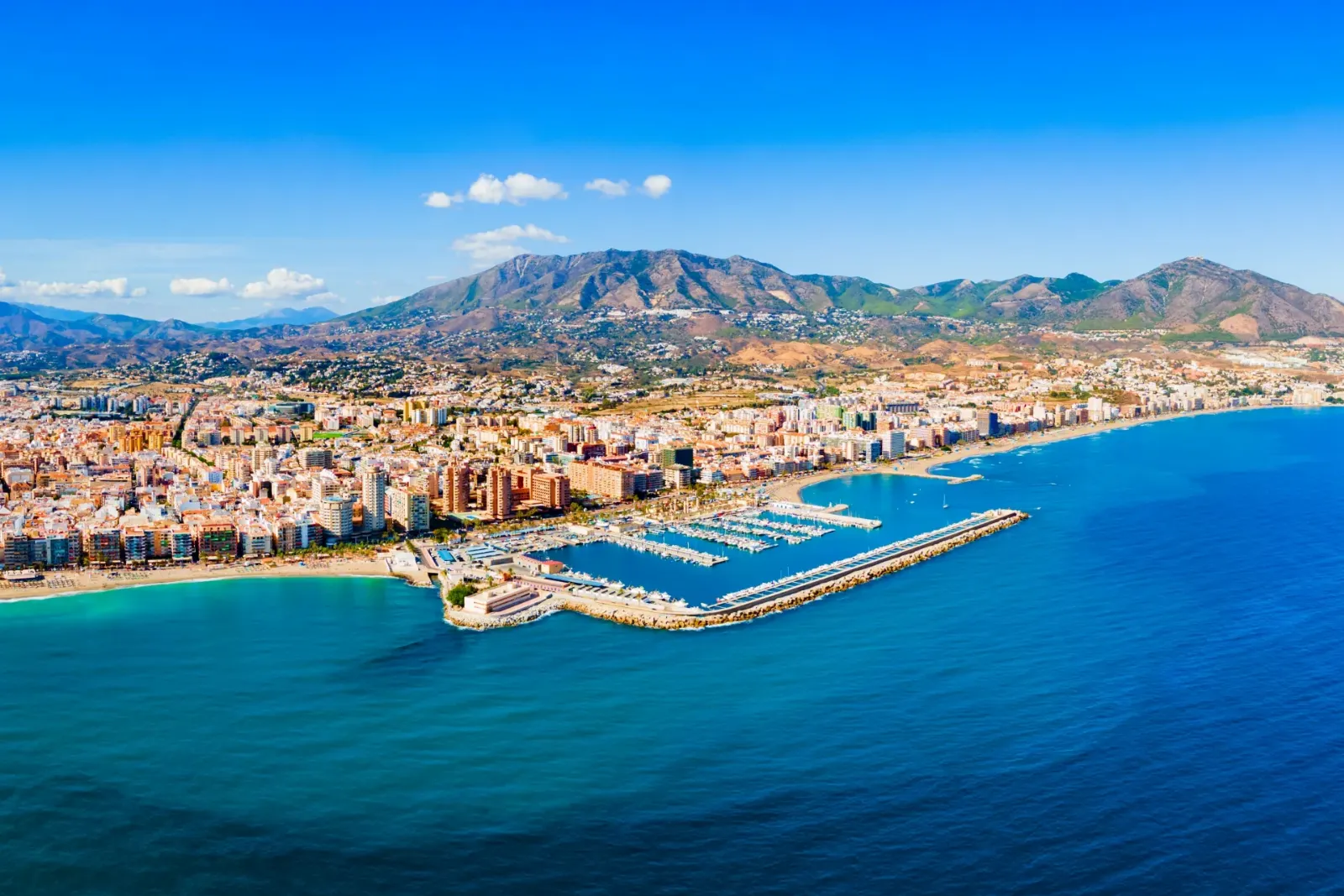
Fuengirola is one of those places that divides opinion, and that’s exactly why it deserves a closer look.
Some people walk the paseo and see life, energy, and the comfort of knowing you can get on a train to the airport or Malaga city in half an hour. Others see the crowds, the tall concrete buildings, and the density and decide it is not for them. Both reactions are fair.
A lot depends on what you compare it with and where you come from. If you are used to polished resorts with manicured golf courses, Fuengirola will feel rougher around the edges. If you are coming from a quiet inland village, the international cafés, busy markets and year-round buzz will feel like a lifeline. For many who move here, the attraction is exactly that mix.. A town that is lived in by Spaniards and expats side by side, not just dressed up for tourists.
I have walked clients through the old town where tapas bars spill onto the plazas, and I have also heard people dismiss it within minutes because they wanted more charm and less concrete. That is Fuengirola in a nutshell. It has real pros and real cons, and it does not hide either. Which is why, when it fits, it fits better than people expect.
A City On The Beach
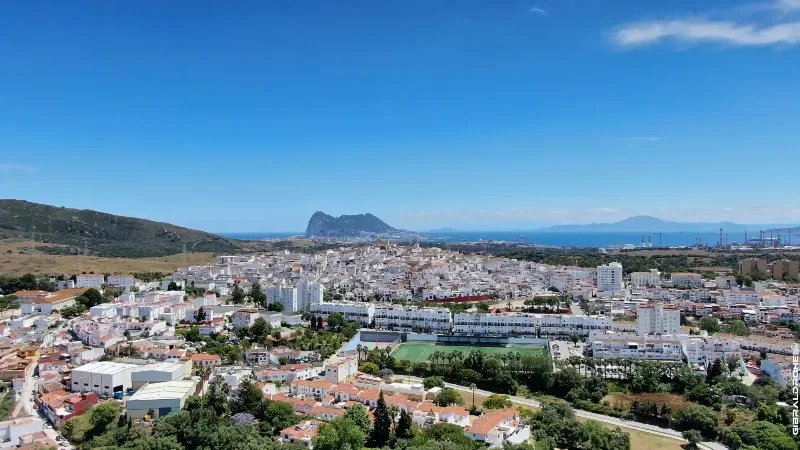
Fuengirola is small on a map but big in spirit. The official municipality covers just over ten square kilometres, a thin strip of land running seven kilometres along the sea and barely two inland. That makes it one of the smallest municipalities in Spain, yet more than ninety thousand people are registered here. The postal code area stretches a little wider, often pulling in parts of Mijas Costa and Benalmádena, which is why so many homes are advertised as “Fuengirola” even when they technically are not.
Geographically it sits west of Benalmádena and east of Mijas Costa, with Marbella twenty five minutes down the A-7 or sometimes less with the toll road AP-7 and Málaga airport less than fifteen minutes the other way. In terms of position on the Costa del Sol, this is about as central as it gets.
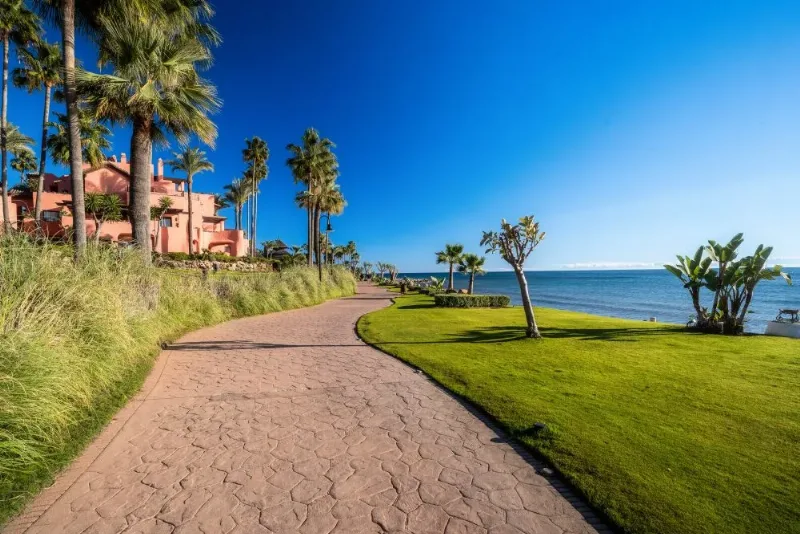
The density is impossible to ignore. Streets are narrow, pavements are crowded, and life plays out in the open. The paseo is the stage. Seven kilometres of promenade where everyone ends up sooner or later. Pensioners linking arms, kids on scooters, dog walkers weaving between strollers, Cyclists, a lot of Finns and tourists glowing red by day two of their holiday. Some find it charming, others find it too much, but it is always alive.
The secret weapon is the train. The C1 line runs straight from Málaga city and the airport to Fuengirola, ending right in the centre. Thirty four minutes, a couple of euros, and you are on the beach. It is the only place on the coast where you can realistically live without a car, and for many that makes up for the lack of space and the crowded summer months.
Neighbourhoods And How They Feel
Centro and Paseo
This is where the buzz never stops. The grid is flat, the marina is on your doorstep, and there is always a bar open. The charm is the convenience. The downside is the same convenience, because the nightlife and noise do not really switch off in summer.
Los Boliches
The Scandinavian heart of Fuengirola. Finnish, Swedish, and Norwegian flags mix with Spanish cafés, and the weekly market takes over like clockwork. The beach here has Blue Flag quality, the promenade is lively but manageable, and the streets behind are filled with bakeries and tapas bars. It feels like a smaller town wrapped inside the bigger city.
Los Pacos
Climb just slightly inland and you hit the Finnish enclave. There is a Finnish school, Finnish cafés, Finnish real estate agents, and you even hear the language in the playgrounds. It is quieter than the centre, family heavy, and surprisingly affordable compared to the beachfront.
Torreblanca and Carvajal
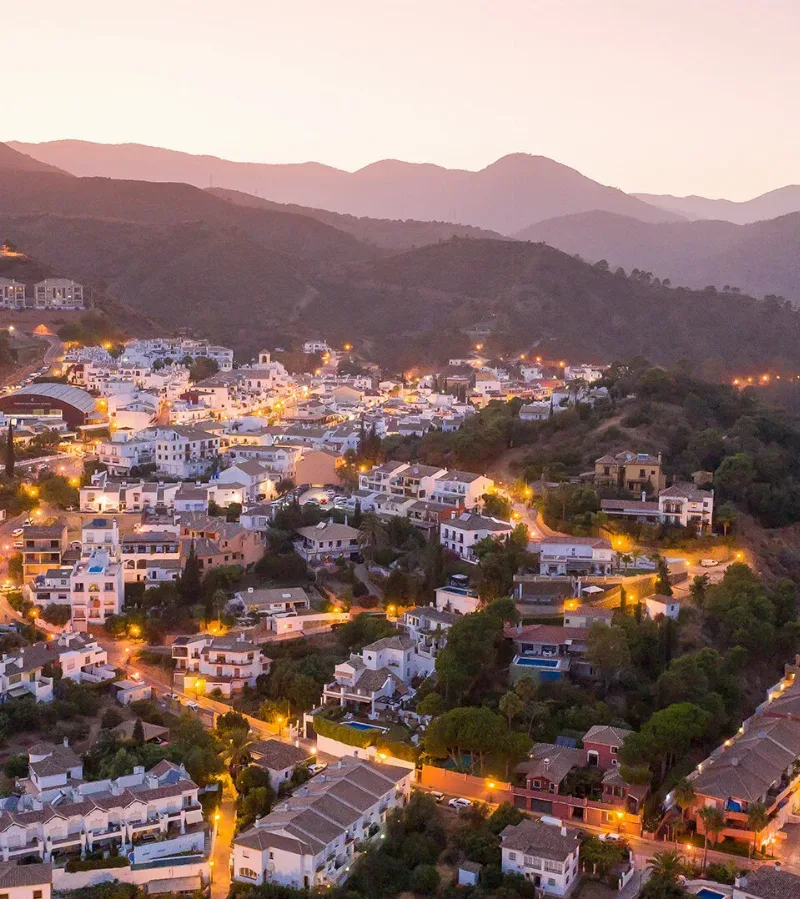
Head east and the ground tilts upward. Torreblanca is known for steep streets that test your legs but reward you with some of the few proper sea views in Fuengirola. Most of the housing here is a mix of older blocks, small villas and newer villas. Some people love the hillside feel and the fact that every balcony points to the water. Others find the constant climbing less romantic. The train stop at the bottom makes life easier and keeps it connected to the rest of the coast.
Carvajal marks the eastern edge of Fuengirola before you step into Benalmádena. The beach here is one of the widest and cleanest stretches, lined with bars and restaurants, and much calmer than the crowded centre. It is also a dining destination. Los Marinos José and Los Marinos Paco are legendary seafood spots and both sit right here on the sand.
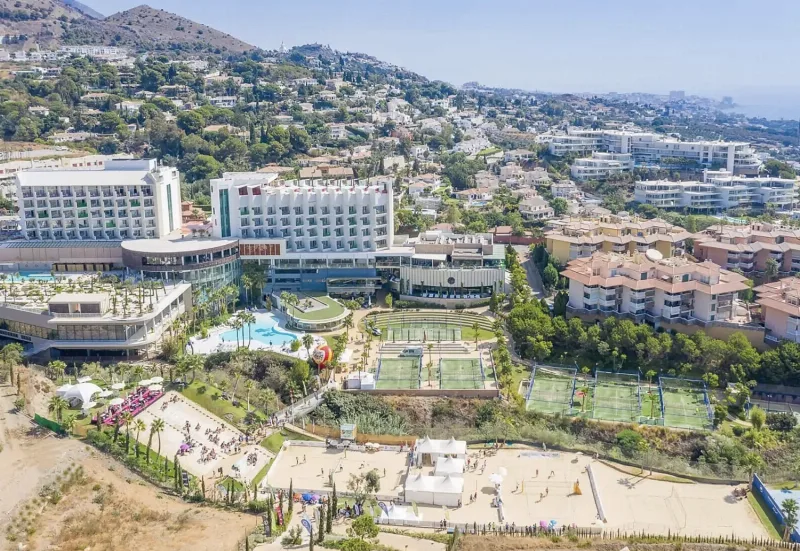
Just above Carvajal the hillside turns into Higuerón. This is the upscale resort area, built out over the last decade into something closer to a city of its own. With its Hilton Curio hotel, Michelin star dining, beach club and wellness focus, Higuerón has become the only real resort-style neighbourhood in this part of the coast. It is technically split between Fuengirola and Benalmádena but it draws people from both. For buyers who want new builds, international neighbours and amenities that feel more like Miami, Higuerón is where they usually end up and I’ve placed dozens of clients in the resort that sells itself.
Sohail and Miramar
At the western end of Fuengirola rises Sohail Castle, a fortress that has watched over the coast for more than a thousand years. The first foundations were laid by the Romans, rebuilt by the Moors in the 10th century, and later reinforced by the Christians after the Reconquista. Its location on a small hill right by the sea made it a natural lookout and defence point, guarding the mouth of the Fuengirola River.
The castle’s most famous moment came during the Peninsular War in the early 1800s, when a small group of Polish troops fighting under Napoleon held off a much larger force of British and Spanish soldiers in what became known as the Battle of Fuengirola. It is one of those odd chapters where the history books remind you this coastline was never as sleepy as it looks today.
Today Sohail Castle no longer defends the town but entertains it. The Marenostrum festival sets up its stage each summer with international concerts right by the walls. The castle grounds also host medieval markets, food fairs and open air cinema. Behind it lies Miramar, the shopping centre that handles everything from Zara to Carrefour, and gives families their cinema, supermarket, food courts and easy parking. This end of town is practical, lively during events, and offers a little more breathing space compared to the denser centre.
The Old Town
Fuengirola’s old town is small but it punches above its weight. Plaza de la Constitución is its centre, with the white church watching over it and shaded benches where people gather. In December the square glows with Christmas lights, and throughout the year it fills with markets, book fairs and community events that keep the town anchored in tradition.
Calle Moncayo, better known as Fish Alley, comes alive at night. It is a blur of waiters weaving through tight tables, music spilling out from tapas bars and the smell of fried fish in the air. It is chaotic, noisy and exactly where you go if you want to eat your way down the street one plate at a time.
Plaza de los Chinorros is where I usually end up with clients. The square is packed with tables and always buzzing. Casa Colón sits on the corner serving some of the best modern tapas in town. The name is a nod to Cristóbal Colón, or Christopher Columbus, but I have seen more than one American client raise an eyebrow and think it means something else entirely. Thankfully the food clears up the misunderstanding quickly. Just across the way, La Galería serves fresh and contemporary dishes in a younger, stylish setting.
This part of town is not polished and it does not try to be. That is exactly what gives it its charm. It is where you see Fuengirola’s social side in full flow, neighbours chatting, families strolling, tourists discovering croquetas for the first time. Always crowded, always alive, and never boring.
Festivals And Traditions
Fuengirola does not let its Andalusian traditions fade. In October the Feria del Rosario takes over. Horses parade through the streets, locals wear “gipsy dresses”, and the fairground lights up for a week. It is as authentic as it gets, and you realise quickly this is not for tourists, this is for the town itself.
In July, Los Boliches hosts the Virgen del Carmen procession. The Virgin is carried through the streets and straight into the sea with fishing boats circling. It is a mix of faith, spectacle and beach life, and it sums up the coastal culture perfectly.
Beaches
Seven kilometres of sand means there is something for everyone, but you need to understand the differences.
Los Boliches is busy, family friendly, and has beach bars lined up one after another. Carvajal is wide and slightly calmer, good for people who want space. El Castillo near Sohail is pet friendly and draws locals with dogs. Central stretches can feel overcrowded in July and August, but they also have the most services.
The downside of Fuengirola’s flat terrain is views. Unless you are frontline on the paseo or up the hill in Torreblanca or Higuerón, your sea view will be more wishful thinking than reality.
Things To Do Beyond The Sand
Bioparc Fuengirola is a small jungle-style zoo that manages to feel immersive without needing an entire day. It is one of the better family outings on the coast.
Aquamijas water park is smaller than the big names in Torremolinos or Tenerife, but every summer it fills with local families who don’t want to drive further.
Sohail Castle adds culture. Summer concerts under the walls attract international artists, medieval fairs bring out locals in costume, and the outdoor cinema makes the most of warm evenings.
Markets are essential to the town. The Tuesday market at the feria ground is enormous, selling everything from fresh fruit to knock-off handbags. Los Boliches also hosts one of the most popular weekly markets. And the boot sale at the feria ground on Saturdays is where locals go treasure hunting.
The marina is small but charming, with dolphin watching tours, boat rentals and fishing trips. It is not Puerto Banús and you won’t see Ferraris or lamborghinis, it has its own personality.
Food And Drink
Fuengirola is packed with restaurants, from tapas bars to international kitchens.
Casa Colón is my usual starting point. It balances modern tapas with a lively setting in Plaza de los Chinorros. Palangreros is the opposite, traditional Spanish dining with service that makes you feel part of the family.
Los Marinos José and Los Marinos Paco near Carvajal are seafood legends, consistently ranked among the best in Spain. People travel from across the coast to eat here.
For brunch, Casa Carina and What the Brunch are reliable. La Galería, set in a former gallery space, brings together a collection of international food stalls under one roof and is as much about the social vibe as the food itself. Restaurante Las Tablas del Rey in Carvajal delivers rustic Spanish grill dishes with a cosy seaside atmosphere, while in the centre Bodega Charolais is a long-standing favourite for Basque and Andalusian classics, with a good wine list and a courtyard that feels timeless.
Eating in Fuengirola is not about Michelin stars, apart from Sollo in nearby Higuerón, but about variety and accessibility.
Who Lives Here
Fuengirola is as much international as any other town on the Costa del Sol. British and Irish expats are everywhere, Swedes and Norwegians anchor Los Boliches, Finns dominate Los Pacos, and Germans and Dutch have their own networks.
Social classes are just as mixed. Pensioners play cards in the cafeterías, young families walk kids to school, digital workers type away in cafés, and seasonal workers flow in and out. It is not exclusive, it is inclusive, and that is exactly what some people love about it.
Summer Versus Winter
July and August are chaotic. The beaches are packed, the streets are buzzing, and finding parking feels like winning the lottery. If you like energy, it is brilliant. If you like peace, you will not find it.
Winter is calmer but steady. Cafés are still busy, associations run events, and the paseo is just as busy with walkers, only this time wearing jackets. It is one of the few towns on the coast that never really switches off.
Pros And Cons
Pros
- Walkable and flat
- Direct train to the airport and Málaga
- Year round activity with a real community
- Affordable compared to Marbella and Estepona
Cons
- High density and crowded summers
- Limited sea views unless frontline or hillside
- Parking is difficult
- Large stock of dated apartments with mixed quality
Sports And Golf
Fuengirola is still obsessed with padel. Courts fill up daily, and clubs stay open late. The paseo doubles as a running and cycling track, and small gyms are easy to find.
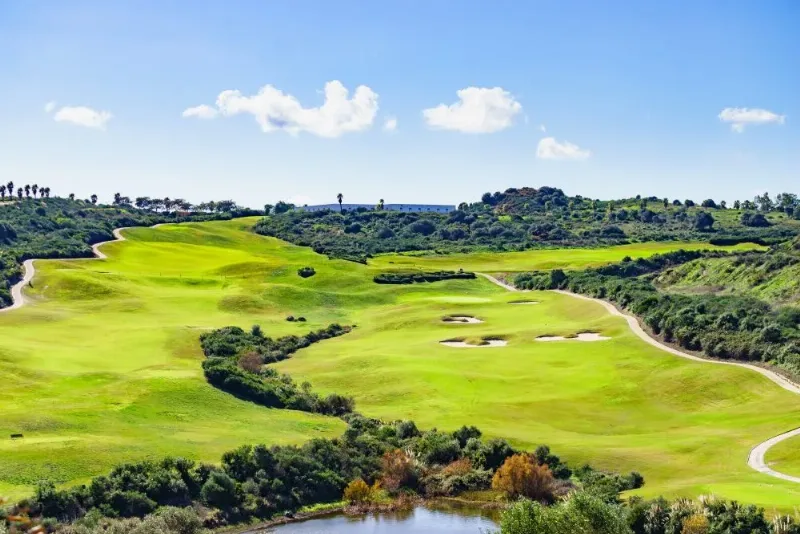
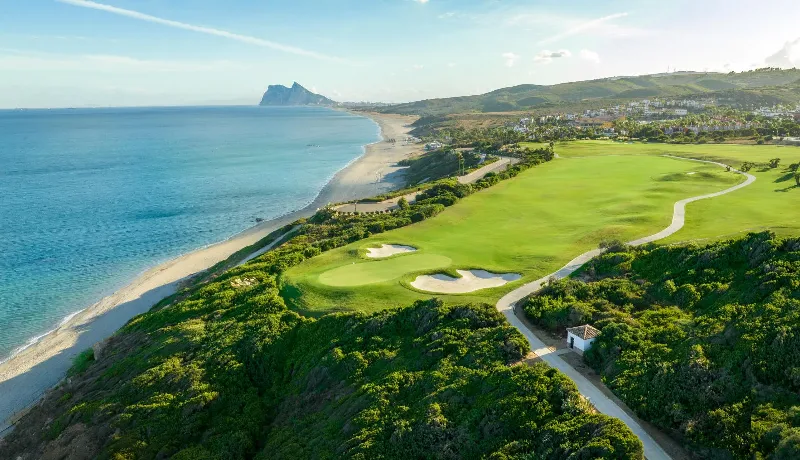
Golf is not in the city, but Mijas Golf, Chaparral and Cerrado del Águila are all within ten minutes by car. For serious golfers, Fuengirola is a base with quick access rather than a course destination.
Shopping And Daily Life
Miramar mall anchors the western side with fashion chains, electronics, a cinema and a huge Carrefour. In the centre, local shops, bakeries and cafés cover daily life.
Markets keep the tradition alive, and they are part of why Fuengirola still feels like a real Spanish city beneath the expat layer. Fresh fruit and veg, clothes, antiques, they are as much social events as shopping trips.
Real Estate And Rentals 2025 to 2026
Fuengirola offers a wide range of property prices depending on area and quality. In the centre there are many resales in older apartment blocks, often at more accessible levels but with mixed standards. Los Boliches and Los Pacos remain popular with buyers looking for value and family friendly neighbourhoods. Torreblanca and Carvajal usually carry a premium thanks to views and newer developments, although older hillside villas can still come in at surprisingly modest prices.
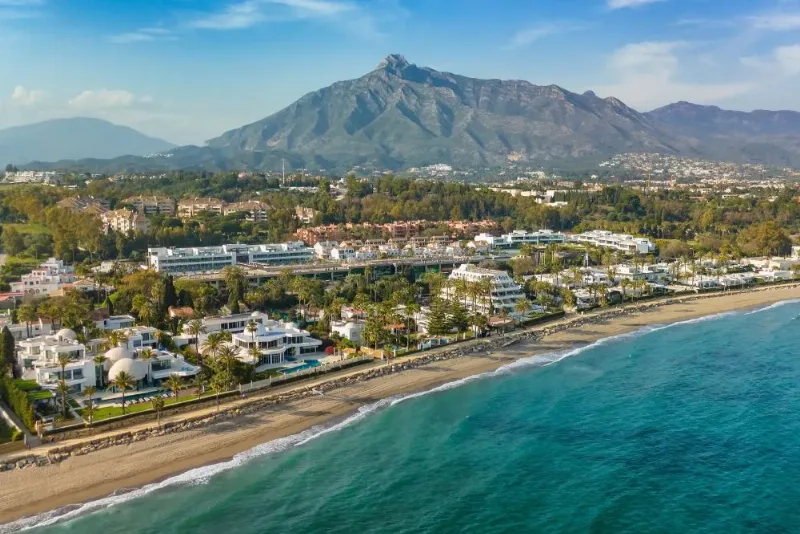
Higuerón, which sits on the border between Fuengirola and Benalmádena, is the clear upscale alternative. It is known for new build projects with resort style amenities and attracts an international crowd. Villas within Fuengirola itself are rare and usually limited to the outskirts or near Sohail.
The rental market is strong but more regulated than it used to be. Fuengirola now requires tourist apartments to meet stricter standards and, in many cases, approval from the community of owners before a licence is granted. Properties must be registered and display their licence in listings, and the council has been reviewing hundreds of existing registrations to ensure they comply. Taxes and municipal fees have also increased for tourist rentals. There is no outright ban, but buyers should be aware that rules differ from one building to another and future restrictions are possible.
Long term rentals remain unaffected by these changes and are in high demand, while short term rentals in prime areas can still generate strong income if the property is licensed and managed correctly. A modern two bedroom apartment close to the beach, for example, can achieve excellent weekly rates during the summer season and remain attractive for winter lets.
Connections And Comparisons
Fuengirola wins for public transport. The train line ends here, buses connect to Mijas and Marbella, and taxis are everywhere. The marina adds day trips and dolphin tours. For people who do not want to rely on a car, it is hard to beat.
Compared to Benalmádena, Fuengirola feels flatter, denser and more urban. Compared to Mijas Pueblo, it feels modern but less charming. Compared to Higuerón, it feels more raw, less modern but far more affordable.
Final Thoughts
Fuengirola is not glamorous and it is not trying to be. What it offers is practicality, community and a pace of life that stays alive all year. Some will dismiss it instantly, others will find exactly what they were looking for.
If you want walkability, international flavour, lower prices and a city that never completely sleeps, then Fuengirola makes sense. If you want space, privacy and sea views, golf and green, you will probably be happier in the hills above. Either way, Fuengirola forces you to decide quickly, and that honesty is part of its charm.




Comments (0)
No comments yet. Yours can be the first.