


Sotogrande is the kind of place that doesn’t need to introduce itself. If you know it, you already understand the appeal. If you don’t, no amount of marketing language will capture it. The best description is this: it was designed by people with serious money, for people with serious money, and it has never deviated from that brief.
It sits inside the municipality of San Roque in Cádiz province, about 25 minutes west of Estepona. Technically Cádiz, culturally Costa del Sol, practically its own world. I have a separate guide for the wider San Roque municipality here if you want the bigger picture.
How It StartedIn the early 1960s, a Filipino-American businessman named Joseph McMicking sent an employee named Freddy Melian on a scouting trip to find a stretch of Mediterranean coastline suitable for a luxury resort. Freddy was apparently already on his way to Europe courtesy of a free Swiss Air ticket he had won. McMicking told him to make himself useful.
Freddy found 1,800 hectares of farmland and cork oak estates near the mouth of the Guadiaro river, sheltered by the Sierra Almenara to the north and 25 kilometres from Gibraltar’s airstrip. McMicking had studied at Stanford, spent time near Pebble Beach, and built Forbes Park in Manila. He wanted to replicate something similar on the southern coast of Europe, and he had the capital and connections to do it. On 19 September 1962, Financiera Sotogrande del Guadiaro S.A. was incorporated across five neighbouring fincas and the project began.
The founding vision was deliberately low-density. Wide plots, no high-rises, green belts between everything. McMicking sold individual plots to wealthy Spanish families and hired architects who shared his restraint. Because the original planning framework has never been loosened, that restraint survives to this day, which is a significant part of why property here holds its value.
The Early MilestonesRobert Trent Jones Sr. designed the first golf course, which opened in 1963 and became the social anchor of the development. The polo club followed in 1965. The first hotel was commissioned the same year, largely as a place to house prospective plot buyers while they made up their minds.
The second Robert Trent Jones course opened in 1974. One of the early buyers, a Bolivian mining tycoon named Jaime Ortiz-Patiño, purchased that course in 1984, brought Trent Jones back to redesign it, and renamed it Valderrama. He spent over a decade pursuing perfection. The World Atlas of Golf described it by writing that you almost feel inclined to remove your golf shoes while walking the fairways. In 1997 it became the first venue outside the British Isles to host the Ryder Cup. A young Tiger Woods competed there for the first time.
The international school opened in 1978, founded by residents led by the retired chairman of Citigroup, who decided his neighbours’ children deserved better options. The marina followed in 1987 on artificial canals. McMicking died in 1990. By then Sotogrande was already irreplaceable.
What It Looks Like TodaySotogrande covers 20 square kilometres. It is the largest privately owned residential development in Andalucía, and the planning restrictions that created it are still in place. No high-rises, limited plot releases, strict architectural guidelines. Because supply is structurally constrained, the market behaves differently here than anywhere else on this coast.
Among the established residents and regular visitors are the current and former Chief Ministers of Gibraltar, members of the Spanish Bourbon family, and a long list of public figures who choose it precisely because it offers a level of privacy that Marbella simply cannot.
There is no conventional town centre. Instead there are zones, each with its own character and price logic, which matters a great deal when you are buying.
The ZonesSotogrande Costa is the original grid. Flat, leafy, cycle-friendly streets running close to the coast, classic Andalusian villas at various stages of renovation or reinvention, and direct beach access. This is where much of the established year-round community lives. It is also the most walkable part of Sotogrande, which feels like a low bar but actually makes daily life easier than most parts of the Costa del Sol.
The Marina is the social heart. Built on artificial canals in the 1980s with thousands of berths for everything from sailing dinghies to serious ocean yachts. Restaurants, bars and boutiques line the waterfront and stay busy well into the night in summer. It draws visitors from across the wider area and has the most animated atmosphere in Sotogrande. Marina apartments are consistently the strongest performers for short-term rental yield, Although the occupancy and pricing can’t complete with Marbella and cities further east.
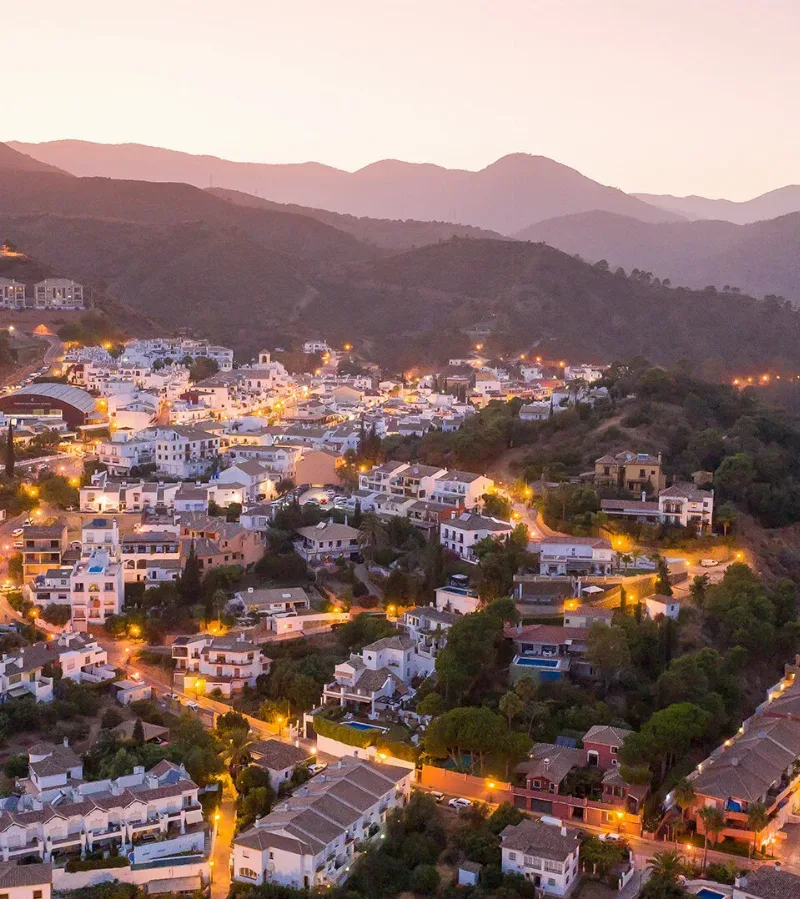
Sotogrande Alto sits north of the main road, elevated into the cork oak hills. The streets are named alphabetically by zone, so locals navigate by letter rather than by name, which sounds confusing until you live with it for a week. Larger plots, greater privacy, panoramic views over the bay and across to the Rock of Gibraltar. It attracts families and long-term residents who want space and genuine quiet. The feeling is closer to a country estate than a coastal resort.
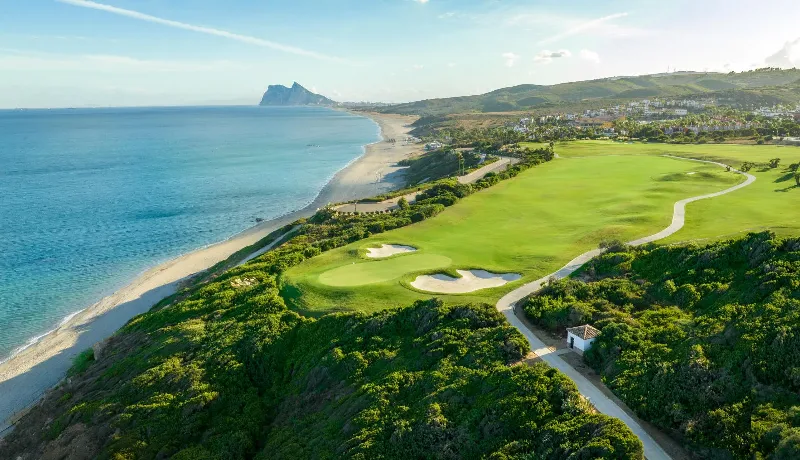
La Reserva is the newest and most exclusive zone. Gated, elevated, anchored by La Reserva Club and its championship golf course. It also contains the only inland saltwater lagoon in southern Spain, a man-made beach club carved into the cork oak hills that now appears on more Instagram accounts than most beaches on the actual coast. The residential product here is architecturally ambitious. Fran Silvestre and ARK Architects have active projects here. Sotogrande is relatively flat. So Villa plots at that sit higher up like The Seven or The Fifteen start at 7 million euros before a single stone is laid, which tells you most of what you need to know about the positioning.
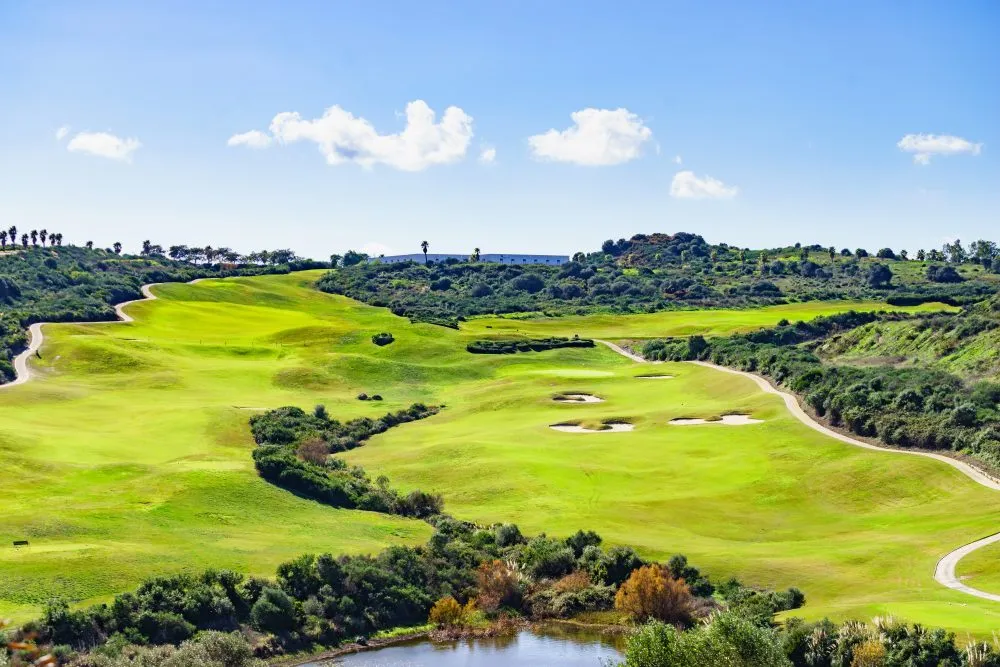
GolfFive championship courses inside Sotogrande itself. Members only Valderrama, ranked number one in continental Europe since 1989 by Golf World, hosted the 1997 Ryder Cup, the Volvo Masters multiple times, and the 2016 Spanish Open. Real Club de Golf Sotogrande, the original Trent Jones design, remains one of the most beautifully routed courses in Spain. La Reserva, designed by Cabell B. Robinson, stretches to 7,400 yards and has hosted DP World Tour and Ladies European Tour events including the Aramco Team Series. Almenara, designed by Dave Thomas across three nine-hole loops, rewards course management over power. La Cañada rounds out the five.
Most destinations on the Costa del Sol advertise their golf. Sotogrande has never needed to and is a must stop for groups of golfers flying in all year round.
Read my golf guide Here.
The Santa María Polo Club is one of the four most important polo venues in the world. It has hosted the International Polo Tournament every summer since 1971, well over 50 editions. The Gold Cup and Silver Cup attract elite teams and spectators from across Europe, and around 45,000 spectators pass through the gates each year. During July and August the polo fields become the social event of the area, drawing a crowd that is distinctly international and generationally wealthy.
Sotogrande is not a rental yield play in the traditional sense. and anyone expecting Marbella-style occupancy numbers will be disappointed. However, the peak events calendar changes that calculation. The polo season runs from July into August, but golf tournaments, sailing events and the wider summer influx create additional windows where demand is strong and rates reflect it. During those periods, weekly figures start to close the gap with more established rental markets further up the coast. The other difference worth noting is the tenant profile. You are not dealing with groups of 22-year-olds treating your property like a venue. The people renting in Sotogrande tend to be polo families, serious golfers, sailing enthusiasts, and people who want quiet luxury for two weeks and know exactly what they are paying for. The wear on the property reflects that, and so does the conversation when something goes wrong.
The equestrian culture extends further than polo. Club Hipica Sotogrande runs dressage, jumping, beach rides and guided hacks through the Almenara foothills with over 100 horses. There are few places on this coast where you can ride along the beach in the morning and be back at a five-star spa by lunch. Fewer still where that seems like a normal Tuesday.
Sailing And WaterThe marina supports a genuine sailing community rather than a decorative one. Consistent winds from the Strait make Morocco a realistic day trip by boat if conditions cooperate. Private sailing tours and yacht charters run throughout the season. The port authority manages thousands of berths, a sailing school, and watersports rental, and because the marina was built on properly engineered canals rather than retrofitted, it functions better than most on this coast.
The HotelsSO/ Sotogrande opened in 2021 as the first five-star hotel in the development, hidden in the cork forest above La Reserva. a spa with a hydrothermal circuit, thalassotherapy, cryotherapy, and a 65-foot pool. Its restaurant is named Cortijo Santa María 1962, after the year McMicking incorporated the project, which is either a lovely piece of heritage branding or an expensive way of naming a restaurant after a year, depending on your perspective.
The hotel is worth knowing about as a buyer because it is the natural base for a property visit and because La Reserva’s lifestyle proposition is partly anchored to it. When you are assessing a 7-million-euro villa plot, being able to stay on site and experience the amenities properly matters.
The SchoolSotogrande International School opened in 1978 and follows the full IB curriculum from age 3 to 18 in English. It ranks fifth among international schools in Spain and sits in the global top 75 IB schools, consistently placing graduates into leading universities across Europe and the US. Annual fees range from around 7,600 to 21,900 euros depending on year group, with boarding available on top.
The school is one of the main reasons families choose Sotogrande over anywhere else on this coast, and it is worth factoring that into a purchase decision even if you do not have children. Because family buyers anchor long-term demand here, proximity to the school supports values in a way that is less obvious but genuinely relevant.
I have clients who vouch for this school. And its something I have my eyes on for my son in the future. You can also select it as a boarding option.
Sotogrande has always attracted a specific type of buyer. Wealthy, private, not particularly interested in being seen & golfers. Spanish aristocratic and business families were among the earliest residents. British, Scandinavian and northern European buyers have been a constant presence for decades. More recently, Middle Eastern buyers, Latin American families, and remote-working professionals with serious budgets have entered the market.
The demographic is broad in age but narrow in profile. Families with school-age children. Semi-retired professionals who want year-round golf and sailing. Ultra-high-net-worth individuals building carefully considered second or third homes in La Reserva. For investment firms looking at the residential market, Sotogrande presents an interesting case because the buyer pool is international, the holding period tends to be long, and forced sales are rare. When something does come to market in La Reserva or the better parts of Alto at the right price, it does not stay long.
The common thread across all buyer types is that they have chosen Sotogrande specifically because it is not Marbella.
The Property Market And What To Know Before BuyingSotogrande performed well through market cycles that damaged other parts of the Costa del Sol. During the post-2008 downturn, when prices fell 10 percent or more across most of the coast, Sotogrande held flat or appreciated in some zones. The financial resilience of its buyers is the main reason.
In 2025 the market remained tight. Average prices across the development sit above 2 million euros, with per-square-metre costs exceeding 3,000 euros in prime zones. Premium villas and plots in La Reserva and Sotogrande Alto have been appreciating at 5 to 7 percent annually. Some transactions in 2025 reached over 20 million euros.
For practical context on the range: a Costa villa needing modernisation starts around 1 million euros. A contemporary villa in Alto with sea views sits between 2 and 5 million. Village Verde apartments in La Reserva start around 850,000 euros. The Fifteen’s plot prices begin at 7 million before construction, and the architects working on those builds are not known for their restraint on costs.
A few things worth knowing that most guides skip:
Because Sotogrande sits in Cádiz province, not Málaga, administrative processes, notaries, and some legal steps run through Cádiz-based institutions. For buyers who have previously purchased in Málaga province this occasionally creates minor friction, and it is worth ensuring your lawyer is familiar with both jurisdictions.
Plot purchases in La Reserva come with detailed architectural guidelines and community standards that go beyond standard planning law. They are not obstacles but they are real, and understanding them before you commission an architect will save time and money.
Because much of the development is still managed by Sotogrande S.A. as a private entity, community fees and governance operate differently than in a standard Spanish urbanisation. This is generally a positive, because standards are enforced consistently, but it means the due diligence process has additional layers that a good local lawyer should walk you through.
Getting Around And PracticalitiesA car is essential. The zones are spread across 20 square kilometres and walking between them is not realistic. The marina and Costa are the most navigable on foot in isolation, but everywhere else requires wheels.
For daily shopping, the marina covers basics and the boutique end. La Línea and San Roque town are a short drive for supermarkets and everything else. Gibraltar is 20 minutes for duty-free electronics, spirits and British products at prices that regularly undercut the mainland. If you have never driven across an active runway to reach a supermarket, the Gibraltar airport crossing remains one of the more memorable errands on this coast.
Healthcare runs through the local San Roque infrastructure, with Marbella’s private hospitals 30 to 40 minutes away for anything more serious. Internet connectivity across the development is strong. Day trips reach Jerez in under an hour, Sevilla in two, Granada in three. Morocco is a ferry crossing from Algeciras. Sotogrande is a base for the wider region, not just a beach address.
The Honest TakeSotogrande has been doing what it does for over 60 years without changing its approach. Low density, private, sport-focused, discreet. The people who love it tend to have found it through a personal recommendation or a chance visit, and then started the quiet process of figuring out how to stay.
It is not cheap. The cost of entry is higher than most comparable areas on the coast, and the ongoing costs between maintenance, community fees, golf memberships and school fees are real. But the product is consistent, the community is genuine, the infrastructure was built properly from the beginning, and the planning framework protects it from the kind of overdevelopment that has compromised other parts of this coast.
If privacy, quality of life, and long-term value matter more than novelty or visibility, very few places in southern Europe compete with it seriously.
Looking at property in Sotogrande or La Reserva? Get in touch for impartial advice across new build, resale and off-plan opportunities, and an honest view of what actually makes sense for your budget and goals.




Comments (0)
No comments yet. Yours can be the first.