


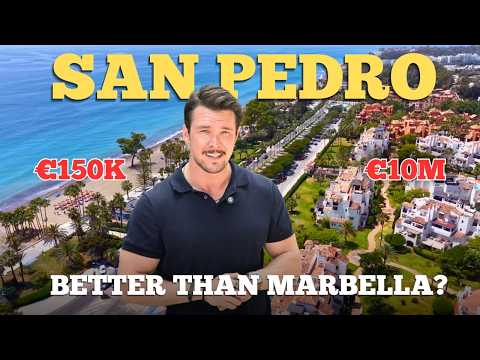
San Pedro de Alcántara isn’t the midpoint between Marbella and Estepona. It’s its own thing. A real town, with history, rhythm, and everyday life. Some buyers stumble into it almost by accident, expecting to find Marbella spillover, and then stay for the lifestyle. Others have known about it for years. Locals. Families. Investors who saw the growth early.
For us, it became home after years in Estepona. It gave us access to everything Marbella offers, without needing Marbella rent prices. But more than that, it gave us community. A place where you can grab coffee, walk your dog, bike along the sea, and run into people you know.
If you’ve never heard of San Pedro before, or just haven’t given it a proper look, this guide is for you.
Where It All Started
San Pedro has roots going back to the 1800s, when it was founded as an agricultural colony. Over time, it grew from sugarcane and citrus farms into a full fledged town with a historic core, a church square, and one of the most livable layouts on the coast. You can still see remnants of older eras around town, like the early Christian ruins near El Ancla restaurant, or the paleontological museum inside an old church.
And while it belongs to Marbella’s municipality (yes, you’ll see “Marbella” on the zip code), it doesn’t try to be it.
Town Layout: The Boulevard Divide
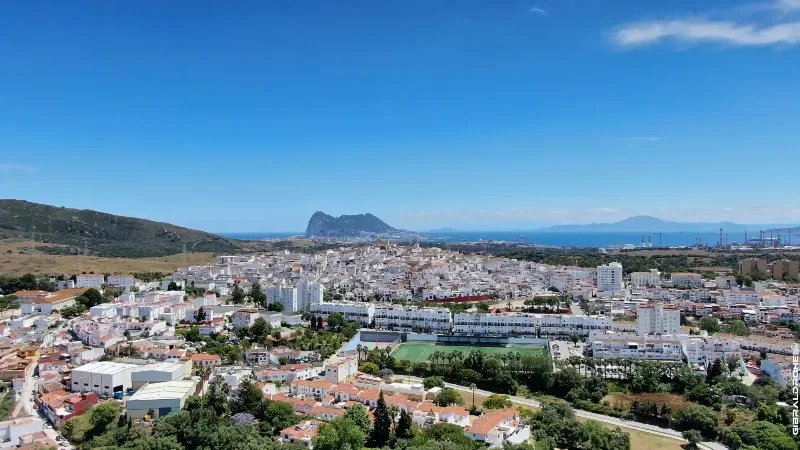
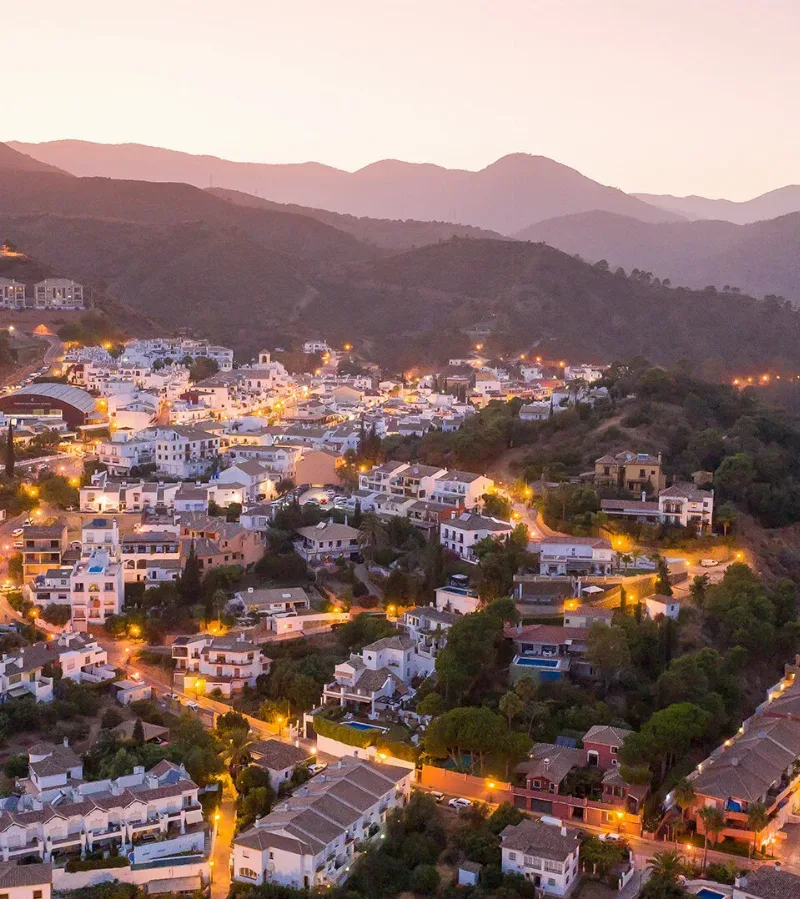
San Pedro is split right down the middle by its large central boulevard. On one side, you have the beachside, more modern apartments, palm lined streets, wider avenues, and some investment opportunities. On the other side, the upper town, a grid of low rise buildings, a historic centre, and more traditional Spanish living. Cozy isn’t the word here. San Pedro is more lived in or… local.
The town hall sits proudly in the square outside the church, a white and yellow building that’s very Andalucía in both looks and attitude. It’s a place where you’ll see locals chatting, kids running across fountains, and a surprising amount of civic pride.
A Real Lifestyle Town
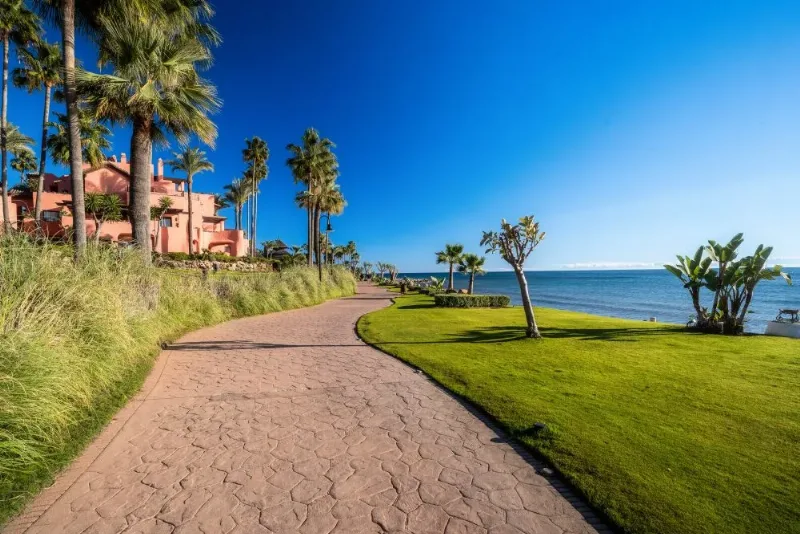
San Pedro is one of the few places on the coast where you don’t need a car. It’s flat, bike friendly (with dedicated blue cycle lanes everywhere), and compact enough to walk to shops, restaurants, cafés, schools, and the beach from most homes.
Sundays are something special here. That’s when the town comes alive. Locals and expats head to the paseo for a stroll, to walk their dogs, ride bikes with their kids, or join one of the many yoga and pilates groups gathering on the grass. Rental tricycles roll by, teenagers cruise on scooters, beach volleyball, and someone’s always playing paddleball badly in the background.
The beach itself? It’s not the best on the coast, if we’re honest. The sand is brought in each year by the town hall and taken back out by the sea shortly after the summer season. San Pedro has been pushing to get the breakwaters which it needs. The water entry is rocky, and most locals know that if you want a proper beach day, you drive a few minutes to another bay. But that hardly takes away from the area’s charm. You’re not here just for the beach. You’re here because life is good here.
Hidden Gems and Local Institutions
A few of my favourites:
El Ancla – A seafood restaurant that’s built illegally close to the water, with a menu that has maybe three options for people like me who don’t eat fish. It’s a mission to find, especially since most people turn around when the boardwalk ends. But it’s worth it. Right next door? Church ruins, a 1600 year old early Christian basilica, built in the 4th century and later rebuilt by the Byzantines, quietly guarding the remains of nearly 200 ancient tombs.
I/O Gym – Probably the most exclusive gym on the coast. We’re talking €140 to €240 a month. And it’s worth every euro if you like things clean, stylish, and a little bit extra. You’ll find me here every day.
Nueva Alcántara Padel Club (NAC) – An award winning padel club that feels more like a lifestyle hub than a sports facility. It’s incredibly popular and not just for locals. It draws people from Marbella, Estepona, and beyond across the world.
The Farmer’s Market – Held every Thursday at the fairground. Handmade goods, local fruit, olives, cheeses, clothes, and souvenirs, often at half the price you’d see at the Saturday market in Puerto Banús.
Food and Vibe
San Pedro has a healthy mix of Spanish and expat friendly dining. You’ll find tapas bars packed with locals, as well as boutique brunch spots and international cuisine. Walk along the paseo and you’ll see people sipping €3 sangrias and laughing about how much this would cost on Marbella’s Golden Mile.
There’s nightlife, but not in the clubbing sense. Think cervezas on terraces, or casual bars around Plaza de la Libertad, where a younger crowd gathers in the evenings. If you’re chasing bottle service and 4 a.m. DJs, you’ll have to go elsewhere.
Development and the Boardwalk to Come
For years, San Pedro was a bit stuck. The plots were overpriced, and many had irregular legal status. That’s now changing. Developers are moving in with big projects, most of them new build apartments close to the beach, launched at prices some found steep for “San Pedro.” But guess what? They’re selling. Fast. New phases are being launched, and it’s clear that this area is only going one way.
One of the most anticipated projects is the completion of the boardwalk, the “Senda Litoral” plan that aims to connect the entire coastline by foot and bike. Right now, the boardwalk ends awkwardly and leaves you wanting more. The plan is to bridge that gap, eventually linking San Pedro to El Saladillo (west towards Estepona) and the rest of the New Golden Mile. When that happens, this stretch becomes even more valuable.
Prices and Property Types
Apartments in the upper part of San Pedro start around €200,000. Often older, with thin walls and less noise insulation. If you like quiet, this might not be your area.
Beachside apartments and townhouses are more modern and better spaced, starting from the €500 to €1M range.
Villas, especially on the beachside, are another world. Properties that sold for €6 million two years ago are now pushing €10 million. That tells you everything you need to know about the growth trajectory here.
If you’re after sea views, note that San Pedro is flat. Penthouses will get you a glimpse. Otherwise, it’s more of a blue line on the horizon kind of thing.
Schools and Surroundings
San Pedro is well covered for education. You’ll find some of the coast’s best schools here or nearby:
Laude International school
Calpe
Colegio San José in Guadalmina Baja
Just above the town is the industrial zone, where you’ll find everything from car dealerships to repair shops and logistic centers. It’s not glamorous, but it’s practical. And it keeps the noise and mess away from the main residential zones.
Connectivity and Access
Marbella: 10 minutes
Puerto Banús: 7 minutes
Estepona: 15 minutes
Málaga Airport: About 40 to 50 minutes (less if you use the toll road)
You’ve got direct access to both the A7 and AP7 highways, as well as reliable bus routes and cycle friendly roads throughout the town.
Final Thoughts
San Pedro isn’t the flashy choice. But for people who know what they’re looking for, families, smart investors, lifestyle first buyers, people who prefer to walk everywhere whilst keeping it affordable, wanting to integrate, it offers incredible value. It’s not trying to be the next Puerto Banús. It’s just trying to stay San Pedro. And that’s enough.
You’ll walk alongside locals. You’ll feel part of something real. And you’ll be a 10 minute drive from everything the coast has to offer.
Curious to see what it actually looks like?
Check out my San Pedro video tour, where I start at the iconic church square and drive through to the boardwalk to show you the lifestyle, the people, and the vibe.
Watch the full video tour here




Comments (0)
No comments yet. Yours can be the first.