


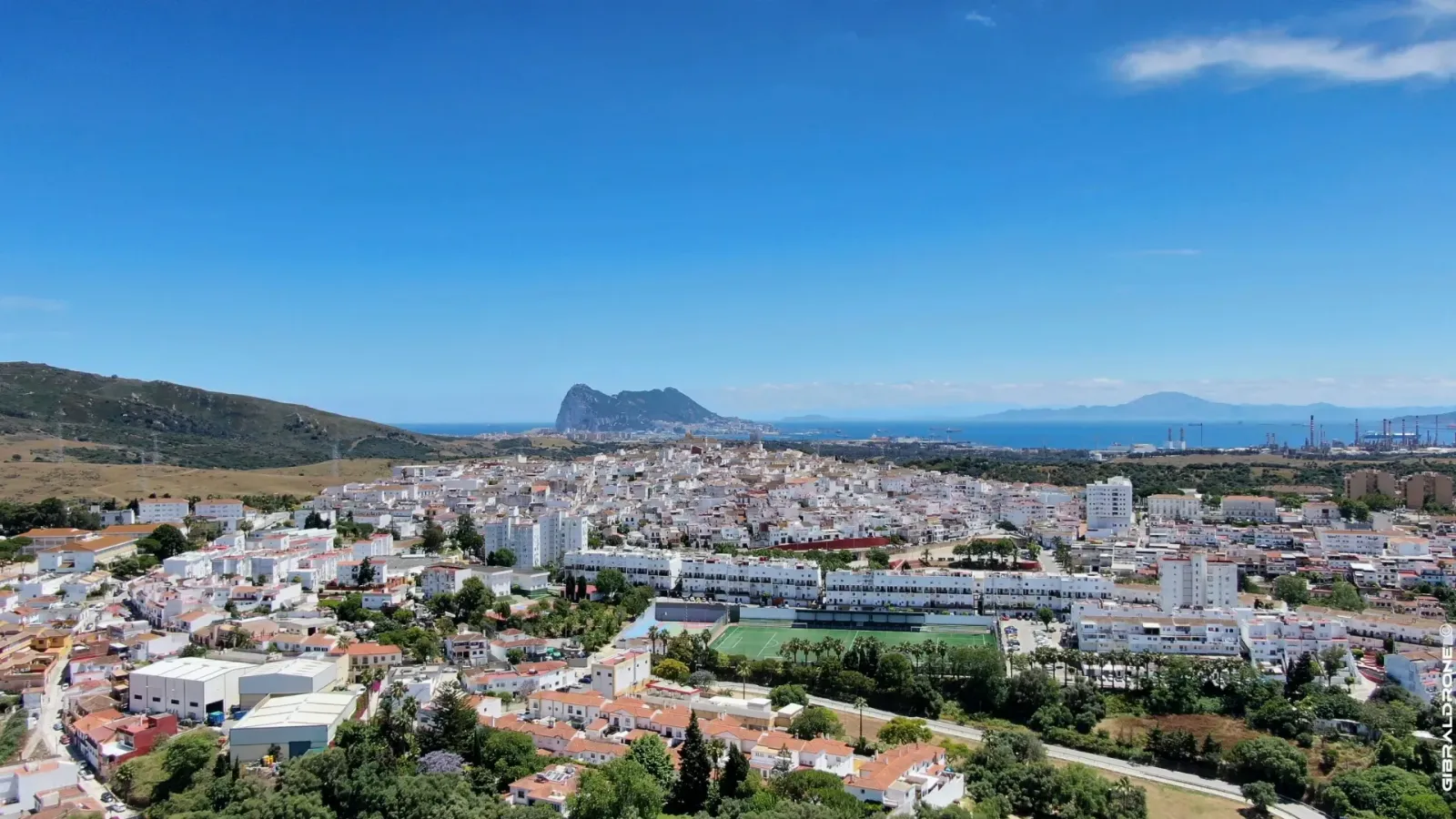
Most people on the Costa del Sol have heard of Sotogrande. Fewer realise that Sotogrande is just one part of the municipality of San Roque, a place in Cádiz province that predates every luxury development around it by about 300 years. When people hear me say San Roque, they often picture the golf club. But San Roque is the whole municipality, and it covers a lot of ground. This guide covers all of it. I have separate guides for La Alcaidesa and Sotogrande if you want to go deeper on either.
Where It Actually IsSan Roque is the last municipality before Gibraltar. It covers around 145 km2 in the far southeast of Cádiz province, part of the Campo de Gibraltar comarca, with around 35,000 registered residents spread across a main town centre and roughly a dozen smaller districts. Although technically not inside Málaga province, it’s often included under the Costa del Sol umbrella.
It sits where the Mediterranean hits the Strait of Gibraltar, with North Africa visible on most clear days. Drive west along the coast from Estepona for about 25 minutes and you cross into it.
Málaga Airport is roughly an hour away. Gibraltar Airport is 15 minutes, and it has direct connections to the UK, often cheaper than flying into Málaga. For British buyers and golfers or anyone travelling regularly between the UK and the Costa del Sol, it changes the calculation entirely. You land 15 minutes from your front door instead of an hour. And you can always compare flights.
The airport itself in Gibraltar is unlike anything else. A single runway cuts straight across the only road into Gibraltar. When a plane lands or takes off, the barrier drops and traffic waits. Drive into Gibraltar and you cross the runway on the way in. The approach comes in low over the water with the Rock filling the windscreen. First-time visitors always reach for their phones.
One practical note: traffic in San Roque is rarely an issu. Even in peak summer you won’t hit the crawl you get between Estepona and Malaga. It’s one of those things you only appreciate once you’ve sat in that queue a few times.
Why The Town Exists At AllWhen Anglo-Dutch forces took Gibraltar during the War of the Spanish Succession, the Spanish inhabitants didn’t stay. Most of them relocated to a nearby hillside where a chapel dedicated to Saint Roch had stood since the early 1500s.
They didn’t go quietly. They took the official city records, the coat of arms granted by the Catholic Monarchs, religious images, and whatever else they could carry. The town was formally constituted a couple of years later. King Philip V referred to it as “my city of Gibraltar resident in its Campo.” The official motto, still on the coat of arms today, translates as “the very noble and loyal city of San Roque, where Gibraltar lives on.”
The church in the old town still holds the original parish records from Gibraltar. The town hall archives contain the municipal records of the Gibraltar City Council going back to the early 1500s. The founders fully expected to return to the Rock. They never did, and San Roque quietly kept the identity of Gibraltar in exile for over three centuries.
One more detail worth knowing: the Spanish poet José de Cadalso is buried in the church. And modern bullfighting as we know it, the Red Cape and Sword technique, was reportedly invented in the Plaza de Armas here. The bullring, built in 1853, is the oldest in Spain.
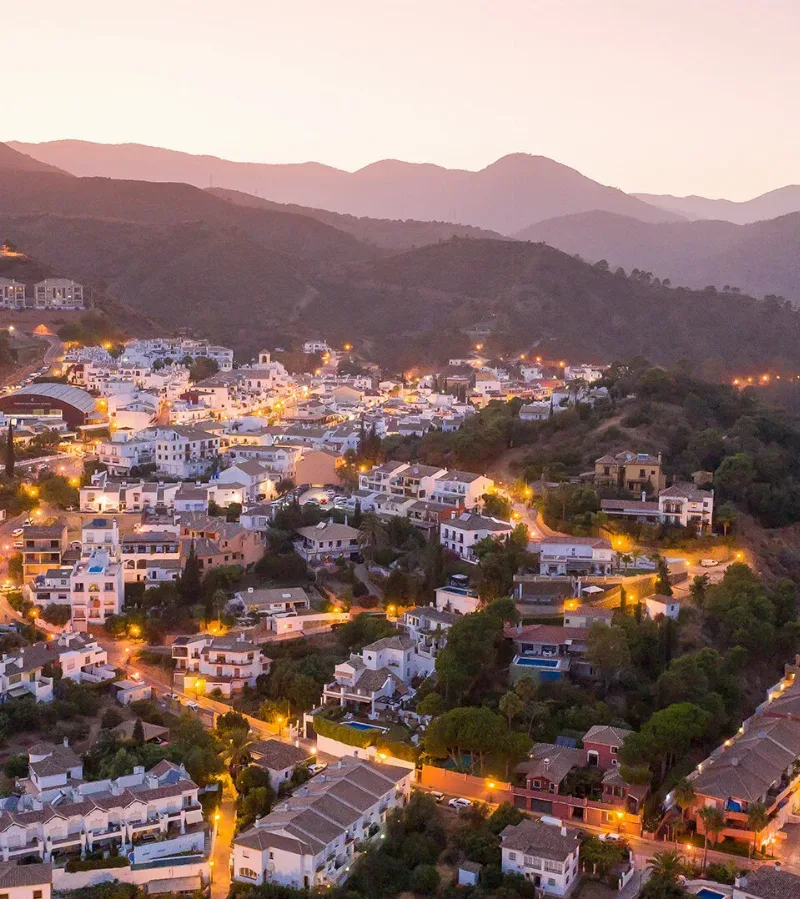
The Municipality TodayThe old town sits on a hill, protected on three sides by the Almenara, Arco and Carbonera mountain ranges. It’s a proper Andalusian white town with wrought iron balconies, narrow streets, a central plaza, and panoramic views across the Bay of Algeciras that on clear days extend to North Africa and the Rock itself.
The municipality is more industrial than most people expect. The CEPSA refinery at Guadarranque is the largest in the Iberian Peninsula, processing 240,000 barrels of crude per day. This matters because there’s a functioning local economy here independent of tourism, which keeps services and infrastructure maintained.
For property buyers, the municipality splits into several distinct zones:
San Roque town is the historic centre. Traditional village homes and apartments, low prices compared to the coast, genuinely local atmosphere. Not where most international buyers end up, but worth knowing if budget is tight and character matters.
Sotogrande is what most international buyers know. Built from the 1960s onward, it’s the largest privately-owned residential development in Andalucía. The marina has thousands of moorings, built on artificial canals in the 1980s. The polo club, Valderrama, La Reserva, the Sotogrande international school. It has around 2,500 permanent residents but swells to 10,000 plus in summer. You can read my Sotogrande guide here.
San Roque Club sits between Alcaidesa and Sotogrande. The clubhouse is a former Domecq family estate, and the two courses were designed by Dave Thomas, part of what’s known as the golden triangle alongside Valderrama and Real Club de Sotogrande. A significant amount of current new build activity is concentrated here.
The club itself has a feeling that’s hard to manufacture. Old money, hushed, well-kept. The floors are polished stone. The greens are in good shape. You won’t see many bright yellow Lamborghinis in the car park, more Jaguars and large SUVs. It’s the kind of place where people have been coming for years and see no reason to stop.
Emerald Greens, a development by Taylor Wimpey sits literally on the other side of the range, looking back down at the clubhouse. It’s a useful reference point for understanding the geography of the area and the contrast between the established club atmosphere and the newer residential product being built around it.
On the villa side, more traditional properties around the club start from around 1 million euros. Modern builds, depending on plot size and position, move into several million without much effort.
Alcaidesa is the entry point to this market. Golf frontline, sea views, a short drive from Sotogrande, and Gibraltar Airport 15 minutes away. Two 5-star resort hotels opened at Alcaidesa Golf in 2025: Fairmont La Hacienda and OKU Andalucía. Those openings matter for the area’s profile and for rental demand. You can read my Alcaidesa guide here.
Guadiaro, Pueblo Nuevo and Torreguadiaro are quieter residential districts closer to the water, more local in feel, popular with long-term residents and families looking for casual.
A car is essential in most parts of the municipality. The old town is walkable, but Alcaidesa, San Roque Club and the wider Sotogrande area are spread out in a way that makes driving (or a buggy) the only realistic option. For shopping, the main options are Centro Comercial Sotovila or El Palmeral in San Roque and the larger La Línea commercial area nearby. Gibraltar itself is worth the 15-minute drive for shopping, with Main Street offering duty-free prices on everything from electronics to spirits.
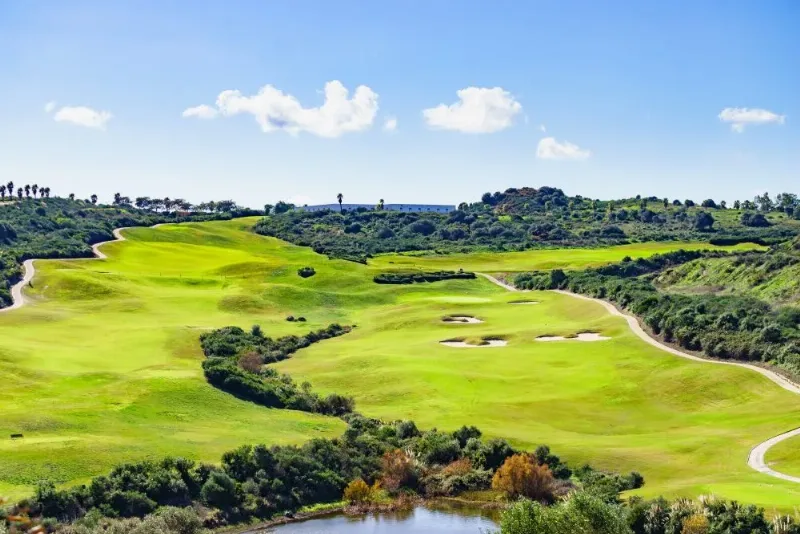
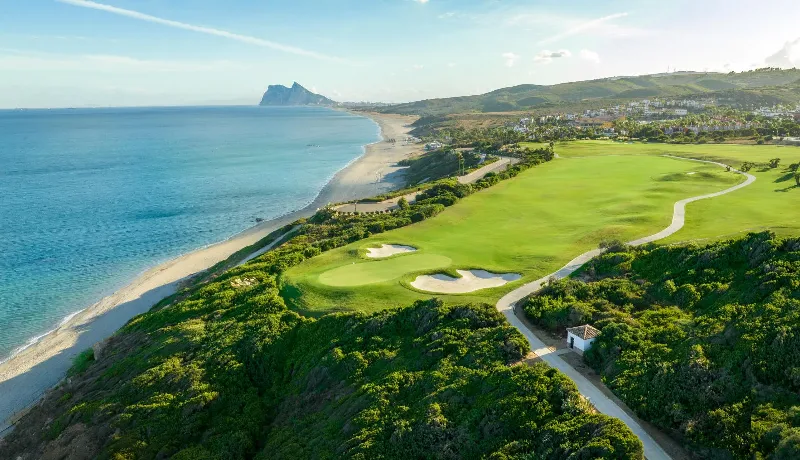
Golf That Needs No Explaining. But…Valderrama hosted the 1997 Ryder Cup, the first time the tournament was held on continental Europe. Tiger Woods played there for the first time. It has been ranked the top course in continental Europe consistently since 1989 according to Golf World. The Sotogrande area contains Real Club de Golf Sotogrande, La Reserva Club, Almenara, San Roque Club’s two courses, and Alcaidesa’s Links and Heathland courses. That’s 6 courses within the municipality alone and several more within a short drive.
For buyers who take golf seriously, this doesn’t exist at the same level anywhere else on the coast.
But these courses come with a price tag.
The Santa María Polo Club in Sotogrande is considered one of the four most important polo venues in the world. The summer tournament season runs from July into August and draws an international crowd. It has hosted well over 40 editions of the International Polo Tournament. The match days create a social scene that brings a different demographic to the area than the rest of the coast in summer, and it sustains a strong short-term rental market with high-end demand.
Who Buys HereThe buyer demographic here skews older than Marbella, typically 52 plus, with a strong representation of retirees, serious golfers, and people who have consciously decided they’ve had enough of busier coastal life. British buyers are the dominant international group, partly because of the Gibraltar flight connection and partly because Sotogrande has had a British community for decades. There’s natural spillover from that into San Roque Club and Alcaidesa. Spanish, Scandinavians, Irish and some northern Europeans make up the next layer. It’s not a young buyer’s market and it doesn’t pretend to be. The people here know exactly what they want and San Roque delivers it consistently.
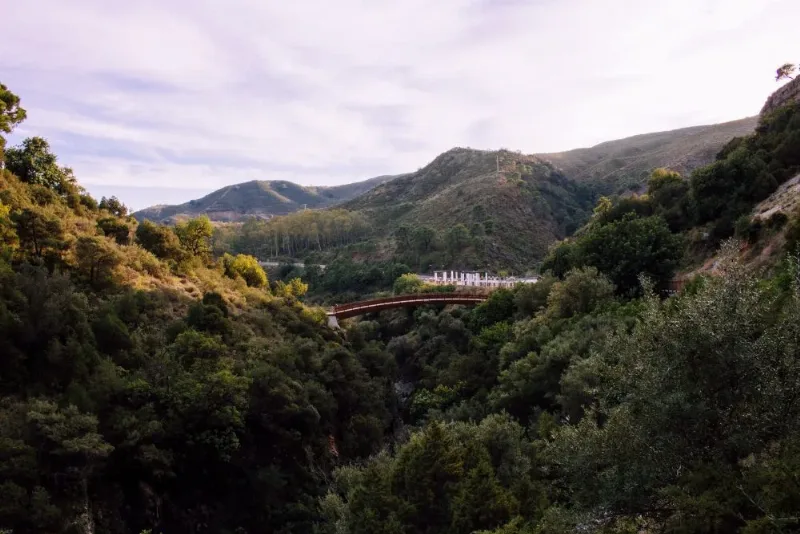
NatureLos Alcornocales Natural Park borders the municipality on the west. It’s one of the largest cork oak forests in Europe, with walking routes, river canyons like Río de la Miel and Canuto del Risco Blanco, and birdwatching. Pinar del Rey is a smaller local park with walking trails and picnic areas. The beaches at Alcaidesa, Torreguadiaro and Campamento are within the municipality, and on the clearest days you can see the Atlas Mountain range clearly. They are one of the reasons I named my son Atlas.
Festivals Worth KnowingSemana Santa in San Roque is declared of National Tourist Interest in Andalucía, with some of the religious images dating back to those brought from Gibraltar in 1704. The Feria Real is held in the second week of August and has run since 1852. The anniversary of the town’s founding is marked on 21 May. These are not tourist events. They’re local traditions that have continued for centuries.
FoodThe local kitchen reflects the coast and the campo. Seafood from the Strait is the main event, particularly tuna from the Atlantic, clams, carabineros, and various white fish prepared as fritura or guisos. Inland produce covers legumes, vegetables and poultry. The classic local dish is pollo a la sanroqueña. In Sotogrande the dining options are more international, with the marina and polo club area offering a range of restaurants. Torreguadiaro’s beach bars are good for casual fish and espeto.
The Property MarketSan Roque and Sotogrande have held a quiet luxury reputation for decades without trying to compete with Marbella. The buyers who end up here are generally not looking for nightlife or visibility.
Sotogrande is tight on supply. New builds around Valderrama and La Reserva command well over 1 million euros. Village Verde, one of the recent apartment developments in Sotogrande, had 2-bed units from around 850,000 euros.
This is mostly about buying a plot for a few mil and building a house that stands out from the rest.
A few Arquitecture companies have the monopoly here. Trying to outdo themselves on each project.
San Roque Club is where some of the active new build pipeline is right now. The Adel development offers 4-bed townhouses from 500,000 euros with a Q1 2026 delivery. Emerald Greens by Taylor Wimpey had 2-bed apartments from 375,000 euros.
Alcaidesa is where the entry point sits. Multiple active developments including Atria (144 units, 2-3 bed, from around 450,000 euros, delivery Q1 2028), Serenity (from under 300,000 euros for smaller units), and Alcaidesa Homes. The combination of the new 5-star hotels, the golf infrastructure, the Gibraltar Airport access and the relative value compared to Estepona or Marbella makes it a serious option for buyers. And to be fair, it attracts a different type of buyer than you find in Marbella.
One thing to factor in: San Roque is in Cádiz province, not Málaga. The applicable taxes and administrative processes are handled through Cádiz.
The SummarySan Roque won’t suit everyone. If you want to be in the middle of the Marbella social scene, this is the wrong end of the coast. Puerto Banús is 45 minutes to an hour. Marbella Old Town is similar.
What you get instead: arguably the strongest golf infrastructure in Spain, a polo scene with genuine global standing, Sotogrande International School, two functioning airports within reach, a nature park on the doorstep, beaches that aren’t overcrowded, a functional local economy, and entry prices in Alcaidesa that compare very well to anything equivalent near Marbella.
It’s a different kind of coast. The buyers who discover it tend to stay.




Comments (1)
Linda Sotkasiira · 5 months ago
Great guide! Always learning something new when reading your guides