


Most people know Spain for the Mediterranean beaches, the tapas, and the sun drenched plazas. Fewer realise that part of Spain sits on the African continent in the form of two fascinating enclaves: Ceuta and Melilla. Perched on the North African coast, these small but historic cities are Spanish through and through, yet offer a unique mix of cultures, scenery, and stories you will not find anywhere else in Europe.
This travel guide will show you how to get to Ceuta and Melilla, what to see when you are there, and why a day trip or even a longer stay is worth it. From ferry rides across the Strait of Gibraltar to wandering the fortifications of Melilla la Vieja, visiting these Spanish enclaves in Africa is one of the more unexpected and rewarding experiences you can have.
Ceuta | A Spanish Town in Africa
When you arrive in Ceuta, it feels like you could be in Andalucía. You have the tapas bars with clinking glasses, the plazas where families meet, and the old men playing cards in the shade. Then you look out across the water and remember you are on the African side of the Strait of Gibraltar.
Getting to Ceuta is surprisingly easy. From Algeciras you can take a regular ferry, a faster catamaran, or a helicopter that gets you across in minutes. There is even a helicopter service to Málaga airport, which makes for one of the more scenic commutes in Spain. And yes, some people really do commute daily from Ceuta to the mainland.
Ceuta is also one of the EU’s only land borders in Africa, which makes it a place of both connection and control. The border with Morocco is guarded by a double fence about six metres high, complete with barbed wire, cameras, and patrols. In the nearby Moroccan hills around Fnideq, groups of migrants gather in hopes of making what locals call “the jump,” climbing the fence together. Alone, it is almost impossible. Together, some make it, some ask for asylum, but most are quickly returned. It is a subject the locals treat seriously. You will feel that when you spend time here.
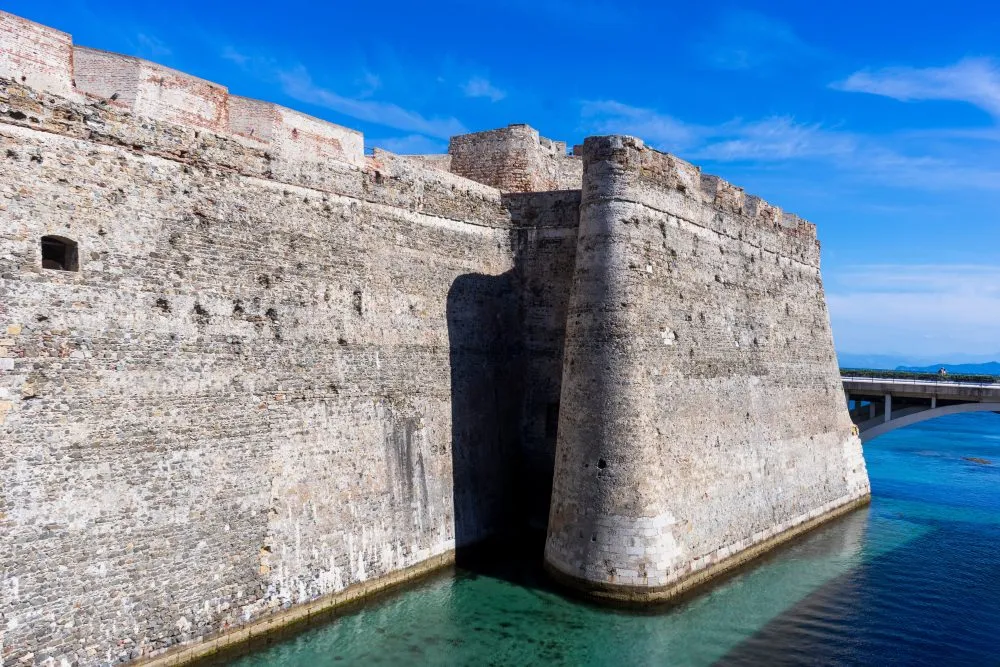
The city itself is compact, just 18.5 square kilometres and home to around 90,000 people. You can walk most of it in a day. The harbour is picturesque, the Royal Ramparts are worth a visit, and the old fortifications make you realise just how strategic this place has always been. The food is classic Spanish with a few Moroccan influences, and the celebrations for New Year’s Eve could rival those of any city on the mainland.
For a day trip, it is visa free if you are coming from Spain. It is still Spain and Europe, just on Africa’s continent. You can wander the narrow streets, enjoy the duty free shopping, and sit on a terrace with a view back towards Europe. Ceuta is not overflowing with tourist attractions, but that is part of its charm. It feels lived in and real.
The Ceuta You Do Not Read About in Brochures
The history here goes back to Phoenician traders, Roman garrisons, and Portuguese explorers. Spain has held onto it for centuries, and the people are proud of that fact. Ceuta is also culturally mixed, with Christian, Muslim, Jewish, and Hindu communities living side by side. On paper, it sounds like a United Nations meeting. In reality, it is messy, lively, and fascinating.
Birdwatchers love Ceuta for its position on a major migratory route. The military values it for its strategic location, and you will notice the presence of the Spanish army and navy. It is also a free port, which makes shopping interesting and fuels a constant flow of goods across the border.
Melilla | The Eastern Sister
Melilla lies further along the Moroccan coast, about 400 kilometres east of Ceuta. Like Ceuta, it is Spanish, part of the EU, and home to a mix of cultures. The population is similar in size, but Melilla has a different look.
The old town, Melilla la Vieja, is a walled citadel that feels like stepping back centuries. Cultural events are big here. The Charles V Renaissance Market turns the old town into a medieval fair every summer, and Holy Week processions are as dramatic and passionate as those in Seville. Architecturally, Melilla is an unexpected modernist showcase, thanks to Enrique Nieto, a student of Gaudí, who left the city sprinkled with colourful façades and ornate balconies.
One of Melilla’s more unusual attractions is the Route of the Temples, where you can visit a church, synagogue, mosque, and Hindu temple in one short walk. The citadel also houses the only Gothic style chapel in continental Africa. For something more relaxed, Parque Lobera is a landscaped green space perfect for a stroll, and Plaza de España is a beautiful square framed by government buildings.
Melilla’s coastline offers Mediterranean beaches, cliffs, and good walking routes. Like Ceuta, it is a busy trading hub with Morocco, and you will see cross border traffic flowing in both directions every day.
Why You Might Visit
Ceuta and Melilla are not places you go to tick off a list of tourist attractions. They are places to experience. You come here to understand how Spain’s history reaches beyond Europe, to see how cultures mix and overlap, and to enjoy a city that is both familiar and entirely unique. Visiting Ceuta or Melilla is a reminder that Spain is more than the mainland, and that sometimes the most interesting parts of a country are the ones no one tells you about.
If you ever want help planning a visit or understanding how these places fit into life on the coast, just reach out.











Comments (0)
No comments yet. Yours can be the first.