


Why Use An Interior Designer In Spain?
My job description is wide. I do a lot. But I know my limitations, and interior design is one of them. I’m just not that creative.
A natural part of buying a new build in Spain looks like this. You go through the discovery process with me. Selections. Video meetings. Viewings. Reservation. Then KYC and AML. Eventually we sign the PPC, open a bottle of champagne, and a few weeks later the developer feels it’s time to push extras and upgrades while construction continues. Marble swaps, lighting packages, upgraded appliances, overpriced jacuzzis, and sometimes even a generic furniture pack snuck in at the end. The pricing is usually inflated and the choice is limited to whatever the developer’s preferred supplier feels like offering. When you question the price, the answer is almost always the same word. Convenience.
I push back on that. The developer delivers a building. They’re not usually the right people to design the inside of it. An interior designer and her own supplier network will customise more, source better, and almost always come in cheaper than the developer’s upgrade list. I sit in those meetings alongside my clients so they don’t get overcharged for something they shouldn’t, or don’t need.
Once that bullet is dodged and the completion date starts appearing on the horizon, the same question comes up every single time.
What about furniture?
For the better part of the last 5 years, my answer has been the same.
You need to meet Alba.
Who Is Alba
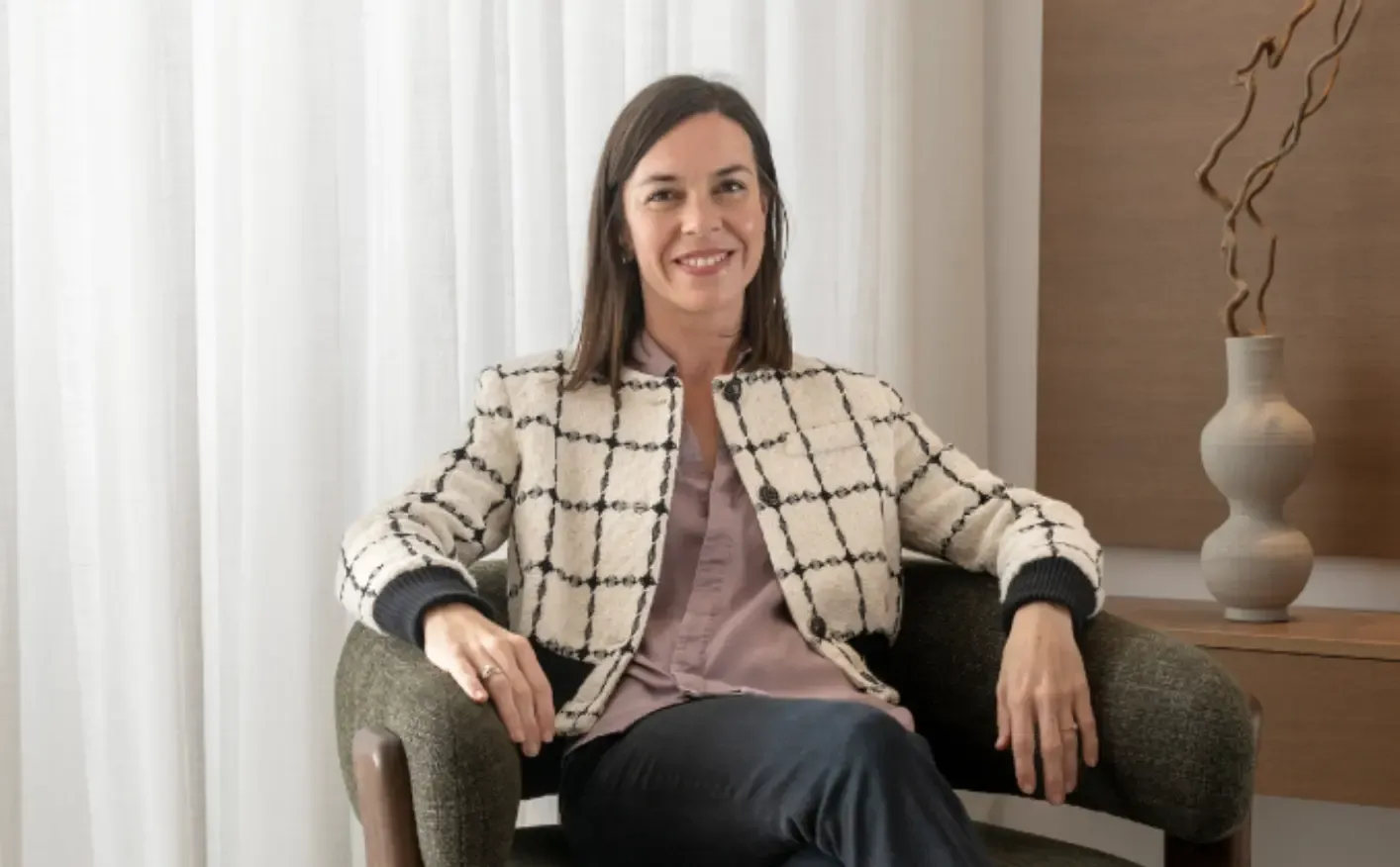
Alba Menasalvas runs https://www.albamenasalvas.es/, an interior design studio in Marbella. She’s a qualified architect, which matters more than people realise. It’s the reason she can walk a snagging list and actually know what she’s looking at, instead of nodding politely at a crack and writing the word “crack”.
Over the last 5 years she’s been an ally, a dear friend, and an intrinsic part of how I work. She’s been involved in some way with almost every client I’ve had. Advising. Building visions for buyers who haven’t even reserved yet. Doing all the furnishings of the homes, guiding investors on furnishing strategies for rentals. Running snagging inspections. Accepting personal deliveries on site alongside the ordered items. Organising her team for small renovations, full villa builds, and everything in between. Following up with developers and builders to make sure their teams actually show up and fix what was reported, signed off only when the work is genuinely done.
All of this with the energy and the confidence of a woman who means business.
For context on her own track record, she’s been working in interior design for 13 years and her studio has been established for 6 of them. So when I tell you the math works on hiring her, it’s not theoretical. It’s been tested against thousands of decisions, hundreds of homes, and every type of client this coast attracts.
Before I Met Alba
I was sceptical about interior designers. I’d worked with a few. But never really got them.
In my head an interior designer was someone who took your money, ordered furniture to your address, and skimmed a margin for being a “creative soul“. The fancier the website, the more creatively expensive the bill.
I know I’m not alone in thinking that. Every client who hasn’t used an interior designer asks me the same thing. Why do I need this person, and what do they actually do? Clients who’ve worked with a good one already know. The math is obvious to them.
For everyone else, by the end of this article it’ll click too. Both economically and practically.
The Process Starts With Discovery
A good interior designer doesn’t open Pinterest and start ordering sofas. She starts with discovery.
Alba kicks everything off with a video meeting. It lets her introduce herself, explain how she works, answer questions, and just as importantly, peek into the buyer’s current home. She’ll often ask the client to walk her through their place, show her what they own, point at things they love and things they can’t stand. Design is subjective. Taste is personal. This step matters.
To give an example of how badly this can go without it. Imagine someone buying a new build in Marbella to run as a holiday rental, and deciding the aesthetic should be red tables and pillow cases, dark leather sofas with brass studs, mirrored bedside tables, ceramic roosters in clusters, and an oriental rug nailed up like a tapestry. It’s not that this can’t be done. It’s that nobody scrolling Airbnb in July from a flat in Stockholm is searching for “Spanish bodega meets gothic mansion”. The vast majority want clean, calm, modern. Light wood, microcement, linen, beige and white walls.
Boring and tasteless for some, but I’m talking about majorities here.
Developers track this obsessively. Every client registration, every sale, tens of thousands of homes a year. They know exactly who buys these properties and what their clientele wants. That’s why they spend millions meticulously designing pasty show flats in what people call “Scandinavian design”, which as a Swede I can confirm isn’t very Scandinavian at all. It’s the look the market is responding to right now, and rentals and resales tend to follow the same playbook for a reason.
Back to Alba’s discovery call. She’ll cover pricing, timing, her role, what to expect. Then she needs to extract a budget.
Easier said than done. Most clients don’t know how much it costs to furnish a home and costs can depend on a million different things like the size and scale of the property, the purpose (rental, holiday home, primary residence), the outdoor space, the square meters, the type of property, and the quality the buyer wants to begin to name a few…
There is of course a physical way to furnish a 2 bedroom apartment in Marbella for €10,000. The same way you can buy sushi at a gas station. Doesn’t mean it’s a good idea.
There’s also a low key truth worth saying out loud. Buying a €2.M home and budgeting €30,000 for the full furniture spec is a bit like buying a Ferrari and putting supermarket tyres on it. It technically rolls. It just doesn’t perform like it should, and anyone who looks at it knows.
The interior should sit roughly at the level of the home, whatever that level is. €400k apartment or €4M villa, the principle scales and the purpose matters.
Quality varies massively at every price point. There are millions of sofas that look identical and cost the same. Some last 15 years. Others sag in 6 months. Alba’s been doing this for over a decade.
And whilst she hasn’t personally sat on every sofa, she has seen which ones come back into projects 5 years later still holding shape, and which ones you’ll be replacing next summer.
She takes the baseline budget, then advises on what’s actually achievable inside it and guides the clients through the process and revisits as many times as needed.
The Vision Board
Naming a budget and waiting for everything to be done isn’t how it works.
After the discovery call, she comes back with an initial full proposal. A PDF with a vision board, mood imagery, layouts that take the real measurements of your home into account, every item with a link, every item with a price.
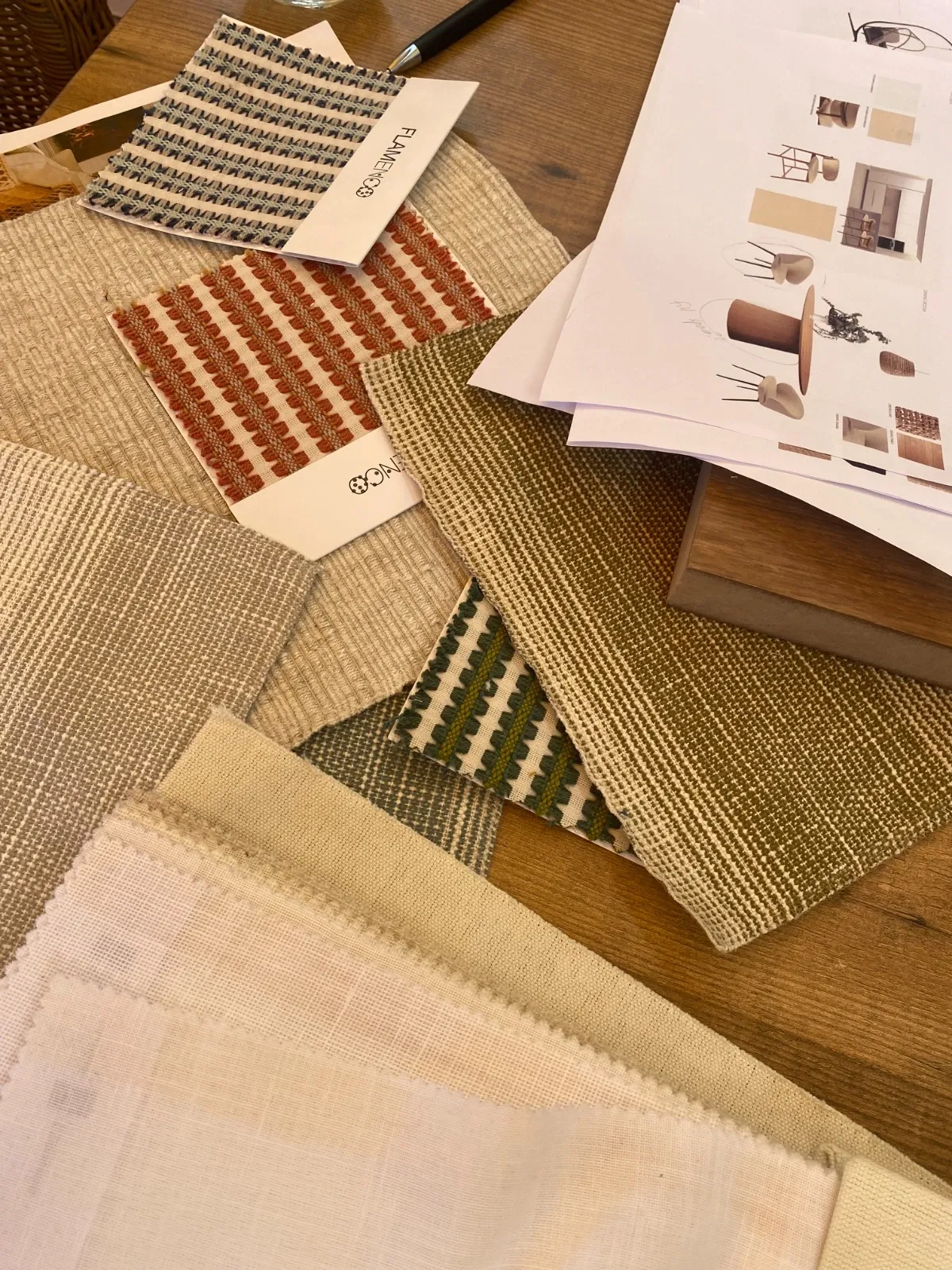
Not a final invoice. A starting point.
You go through it together. Maybe you want to spend less on the kitchen table and more on the TV setup. Maybe you’d rather downgrade the sofa and upgrade the outdoor furniture so it actually survives the Spanish sun. Maybe the sunbeds have to go.
After reviewing the proposal, Talk to Alba. Go through it together. There are years of reasoning behind why she picked one sofa over another, why she chose stone for the bathroom sink and not wood, why the rug in the living room is jute and not wool. That knowledge is what you’re paying for.
Same reason buyers pay me. I don’t pull every MLS listing within budget and forward it as a shortlist. I filter, I cross check, a million other things I can physically put in this guide and I know what works. Alba does the same with furniture, suppliers, layouts, materials. Much, much deeper than most people realise.
She Doesn’t Push Brands
An interior designer I worked with years ago only wanted to sell their own brand. Another would send proposals where every single item was Bo Concept or some other single pricy label.
Alba doesn’t do that. I’ve watched her order Ikea beds for clients who wanted them, then pair those with a bespoke wardrobe and a €30,000 outdoor furniture spec. She adapts completely. She doesn’t push specific stock unless she’s worked with it enough times to know it won’t cause her or her client a headache 6 months later.
Think about it logically. If you spend €50,000 on furniture through her and half of it breaks within a year, it doesn’t just look bad. It costs her the next 5 clients. Reputations on this coast don’t survive that. Her reviews speak for themselves and I’ve seen her work first hand.
The Discount Nobody Tells You About
Here’s the part that flipped my view on the whole profession.
Alba is a working professional with volume. Suppliers give her discounts. Sometimes 10%. Sometimes 30%. She’s a returning customer who orders in bulk and brings them recurring work.
What surprised me when she told me a few years in, and what tells you everything about who she is as a person, is that she doesn’t keep the discount. She passes it straight to the client. Whatever she pays the supplier is what the client pays.
The math gets interesting fast. You pay her for her time and her project management. The furniture itself often lands at a lower price you´d pay yourself. So in the vast majority of cases, from economic builds to €200k bespoke fitouts, hiring her either costs the same as doing it alone, or saves you money outright.
Except you didn’t do it alone.
You didn’t measure every doorway. You didn’t chase 15 suppliers to align delivery dates. You didn’t arrange storage for items that arrived 2 months early. You didn’t book the installers. You didn’t drive to the property at 8am to let the wallpaper team in while the kitchen guys waited downstairs. You didn’t argue with the courier about a damaged headboard. You didn’t reorder the wrong sofa fabric.
All of this in Spanish. Por supuesto.
She did.
Everything She Actually Handles
A short list of the visible work, because most people genuinely don’t know.
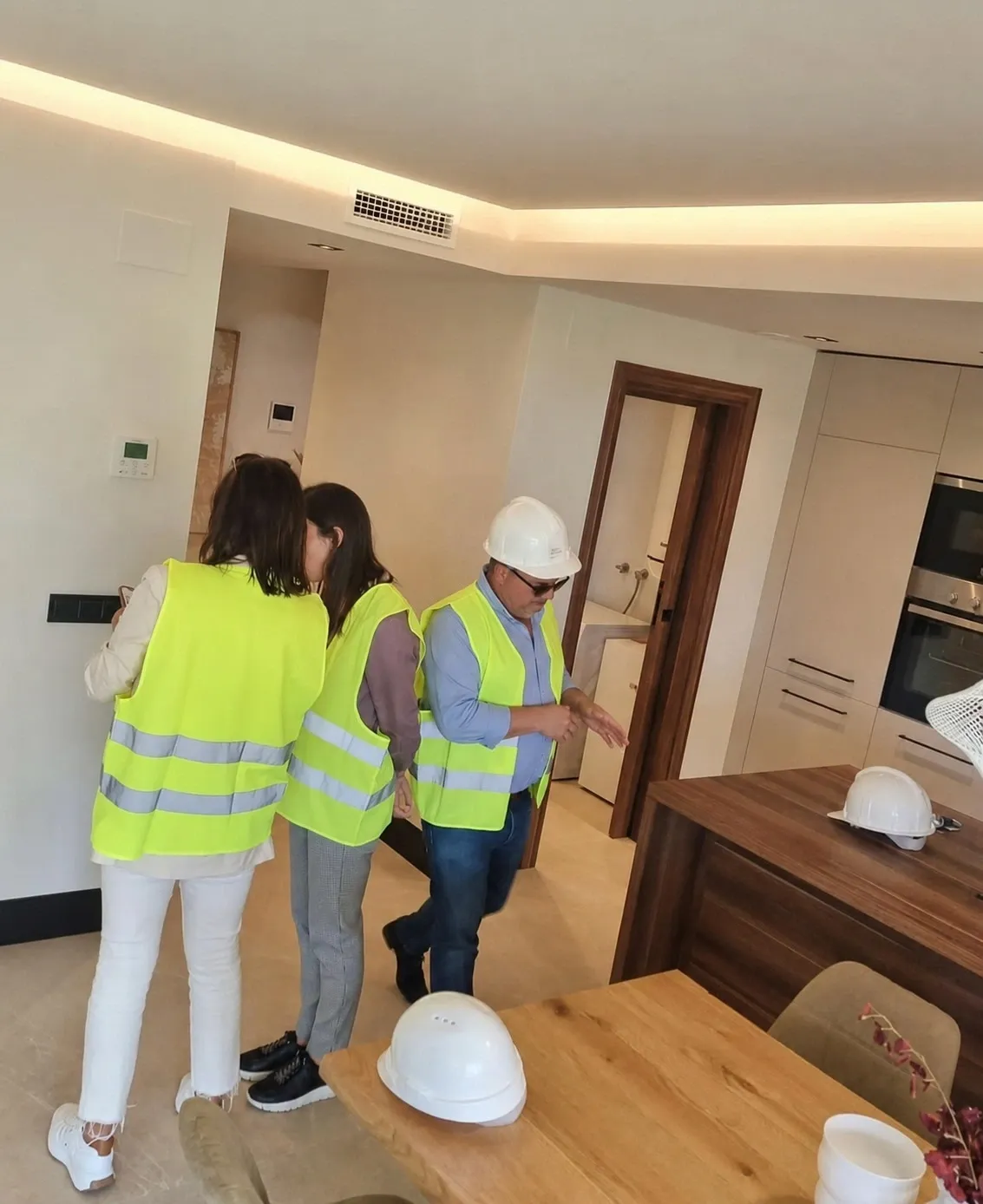
Measuring and layouts. Vision boards and proposals. Sourcing from suppliers across Spain and beyond. Negotiating. Coordinating delivery dates so 12 trucks actually show up and on time for the assembly team waiting on site. Booking storage for items manufactured ahead of completion. Organising installers and assembly teams. Hanging wallpaper. Mounting lights. Installing curtains. Walking snagging lists in her capacity as an interior architect and signing off only when fixes are genuinely done by the teams the developer has the constructor send in which arrive (or don’t) whenever they want. Coordinating with marble workers, garden designers, wallpaper specialists, carpenters, plumbers, electricians, AC technicians. Handling damaged items, which by the way need to be reported within 24 hours of delivery (which is exactly why someone has to physically be there checking furniture deliveries.
That’s not the visible work. Some of this stuff nobody sees, and that’s the part that decides whether your home is ready when you walk in, or whether you’re still living out of suitcases 4 months later
Timings
If you’re due to sign on your home in 2 weeks and it’s mid August, sorry to tell you, you’re sleeping on a blow up mattress.
You can shortcut some of this by ordering in stock pieces, renting a van and driving the bed home yourself. But a full furnishing takes time to arrange. Manufacturing runs, container shipping, installation slots, none of it moves overnight.
Minimum recommended runway is 3 months before completion. In summer, longer. Earlier is always easier on everyone involved. Different brands, different factories, different shipping agencies all run on different timelines. Some pieces ship next day. Others are custom made and take 12 weeks. The longer Alba has, the smoother it lands and she can schedule everything in advance and leave room for error.
The Kickback You’re Probably Not Hearing About
This is the part your agent isn’t telling you. But you can probably guess.
Interior designers give kickbacks to agents. It’s normal. It’s how the industry works on this coast.
But once I understood how much of my own work quietly relies on her, and how much she does to make my clients land softly into their new homes, I made a call. I don’t take her kickbacks. I pass them straight to the client.
That’s another 10% off the bill when you come to Alba through me. If you’ve read this far, save this and mention FORUMCOSTA10% to her studio. The saving applies. Thank me in the comments.
Resales, Staging, And The Smart Investor Move
Alba doesn’t only do new builds. She furnishes resales just as often, handles full renovations, and even runs entire villa builds from the ground up. She even did a commercial premises for a client of mine, from empty brick shell to fully fitted shop in 3 months. Builders, electricians, plumbers, AC teams, carpenters, the lot.
Resales are interesting because the home is already there. The walls don’t move, the kitchen is usually staying, and the buyer has lived with their stuff for years. The work shifts. Sometimes it’s a partial refresh, swapping the heavy curtains, replacing tired sofas, beds, tables, adding light fixtures that aren’t from 2008. Sometimes it’s a full reset where she keeps a few pieces the owner loves and rebuilds the rest of the home around them. And sometimes it’s a complete strip and restart, where the buyer wants to live in the location but not in the previous owner’s taste.
She also handles transitions. Clients moving from an apartment into a villa, or from northern Europe into a Spanish home where half their existing furniture won’t physically fit or won’t suit the climate. She’ll help coordinate the shipping of personal pieces coming down and make sure everything lands well in the new space.
The other conversation on resales is staging. If you’re selling, you want to stage the home for the buyer. Not as a unit or a piece of property or how you did personally for you. They don’t usually care for your personal style. Stage it as a home they can picture themselves living in. The furnishing is often the reason it isn’t moving if the price is right.
I once had a friend’s listing sit on the market for over a year. Barely any viewings. The home was good. The furniture was the problem. Silver finishes everywhere, mirrored everything, the kind of shine that scared off the entire target buyer pool. I told the vendor what I really thought, which was to drop €50,000 on a refurnish in stead of lowering the asking price.
Counterintuitive for them. Why spend more on a home that isn’t selling. But the furniture was actively pricing the home down.
A few weeks later Alba had the home done. the place was light, calm, modern. Scandinavian, as we lazily call it. Asking price went back up by €200,000. Sold for what they wanted including the furniture and recovered the staging cost.
That’s staging. Alba does it.
For investors buying offplan, there’s an even sharper play. You wait 2 or 3 years for construction. Most investors then rush to flip on completion. Historically they’ve done well. The projects I track average around 30% ROI over the build period.
The smarter move is to furnish.
A furnished home stops looking like a flip. It’s a home. It has a vision. The lights are in, the plants are alive, the sun chairs are on the terrace, and the buyer walks in imagining their coffee in the morning instead of doing mental math on your margin.
Smarter still, rent it out for the first year. Let every other investor in the project fight each other on price. Note where they land. Cash flow for 12 months. Let the community settle. Let the communal snags get repaired. Let the construction trucks finally disappear. Let the neighbours move in. Let the plants take root.
Sell the year after.
You’ll laugh at the 30% figure from 12 months prior.
My Own Home (Or, What Not To Do)
She did my place too.
I’ll tell on myself here. I moved in while she was still working on it. I needed a sofa. I didn’t have one. I had a vague plan to camp in one room while the rest of the home got finished around me. It was, in retrospect, exactly what I tell every client never to do.
Seeing it firsthand was tough. Living inside a working site is genuinely brutal. Wallpaper team in one room, assembly team and painters in another, deliveries stacked in the hallway, snags being fixed while new items arrived. There’s a reason most of her clients never see this phase. They land on a finished home that smells like new fabric and looks like the render they were shown 2 years earlier. The chaos in between has already happened.
What it did give me was even deeper respect for what she pulls off. The juggling is real. Things break. Things arrive wrong. Someone doesn’t show up. A piece doesn’t fit in the elevator. Refunds, reorders, rescheduling, new installation dates, the whole thing. She handles it. The client (in this case me, but usually someone in another country entirely) stays out of it.
Take my advice on this one. Let her do her thing. Move in after. Walk into a finished home. The temptation to move in early is real, but trust me, you do not want to be the guy looking for a clean fork for the cup noodles you boiled in a pan because the kettle hasn’t arrived yet, while a wallpaper roll goes up behind your head. That was me.
A Few Questions I Put To Alba
I asked her to answer a handful of the questions my clients most often have. Her words, lightly tidied.
What’s the biggest mistake foreign buyers make when buying a new build or resale on the coast?
Thinking the work starts after they get the keys. The earlier I get involved, the better. Layout, lighting, storage, furniture measurements, outdoor areas, materials, whether the property actually fits the way the client wants to live. A home can look perfect during a viewing, but living in it is something completely different.
What happens if furniture arrives damaged, delayed, or just wrong?
It happens. Especially when there are many suppliers in play. I deal with it immediately, speak to the supplier, find the solution. Incidents often need to be reported within 24 hours of delivery, so someone has to be there checking. The client usually doesn’t even know there was a problem.
Why work with a local studio rather than someone in your own country?
I’ve had clients arrive with a full design proposal made abroad, thinking everything was done. Then reality hits. Most things need to be developed and executed here. Materials, suppliers, timings, local restrictions, the way trades work in Spain. And the most difficult part to control from abroad is supervision, deliveries, installation. Being local isn’t a nice to have.
Do you impose your style on clients?
No. My job isn’t to push my taste onto someone’s home. It’s to understand the client and translate their lifestyle into a space that feels personal. It’s not my house. It’s theirs. Clients come from very different countries and cultures, and that’s part of what keeps every project interesting.
Is hiring a designer actually more expensive, or can it save money?
It’s an investment. It helps avoid wrong purchases, rushed decisions and costly mistakes. I work with trusted manufacturers and suppliers, so I often access better conditions than a private client would. In many cases the discounts balance the fees, and the service adds value in design, coordination and avoiding errors that would cost much more later.
Renovations too, or just furniture?
Both. We design and manage full renovations, develop the technical plans, define layouts, select materials and follow the work on site. We coordinate with builders, electricians, plumbers, air conditioning teams, carpenters and suppliers. For clients who live abroad, that complete project management isn’t optional. It’s the whole point.
Why The Numbers Just Work
The reason this whole model works isn’t the design. It’s her system around it.
She charges for her time and her team’s work. Furniture comes in at supplier price, suppliers plus margin. Her external partners (marble, gardens, specialists etc) come in at preferential rates if they aren’t already in-house. The supplier discount comes off your bill. The kickback comes off your bill when you go through me. The hundreds of hours you’d lose chasing 15 suppliers stays in your life.
So when people ask whether interior designers are worth it, the real answer is it depends on the designer. With the right one, the math genuinely works. With Alba, it works almost every time.
It also helps that her clients tend to turn into her friends. She doesn’t count meetings. She doesn’t bill you for WhatsApps. She treats every home like it’s her own. That isn’t marketing language. It’s what I’ve watched her do for years, including on mine.
I genuinely couldn’t do my job the way I do it without her. And the longer I work with her, the more obvious that becomes.
How To Reach Her
When I was building Forum Costa into something useful for people moving to and buying on the coast, the directory came with a clear rule. Only professionals I’ve worked with directly, watched up close, and would happily put my own family or clients with.
Alba was one of the first names in.
You can find her studio in Nueva Andalucía at C. Sirio 12, on albamenasalvas.es, or through her listing on Forum Costa. If you come through me, mention the discount and the saving applies.
If you’re buying a home with me, you’ll meet her anyway.
Reach her at:
https://www.albamenasalvas.es/
Proyectos@albamenasalvas.es
https://www.instagram.com/albamenasalvas/











Comments (3)
Filip Peretz · 1 month ago
Nice!
Former member · 1 month ago
Nice guide
Linda Sotkasiira · 2 weeks ago
Alba is the best!