


I started my real estate career like most, in the existing home market. Apartments lived in for 20 years, villas nobody knew the full history of, beachfront buildings from the 70s that looked great from the outside and hid a lot inside. The majority of my clients eventually moved towards new builds, flexible payment plans, warranties, modern kitchens. White facades. That became most of what I do now.
But I haven’t forgotten what resales taught me.
With a new build you have warranties, a defect liability period, and a developer who is contractually obligated to fix problems reported in the snagging list. With a resale you have none of that. You have a seller who has lived with the property for years and knows it better than anyone, and who is under no obligation to volunteer the parts they’d rather you didn’t notice. You also have the Costa del Sol itself, which is harder on buildings than most buyers from northern Europe expect. Heat, coastal humidity, sun exposure, and the occasional heavy rainfall do things to materials over time, especially in older stock where maintenance has been inconsistent.
Most of this isn’t visible on a viewing. That’s the problem.
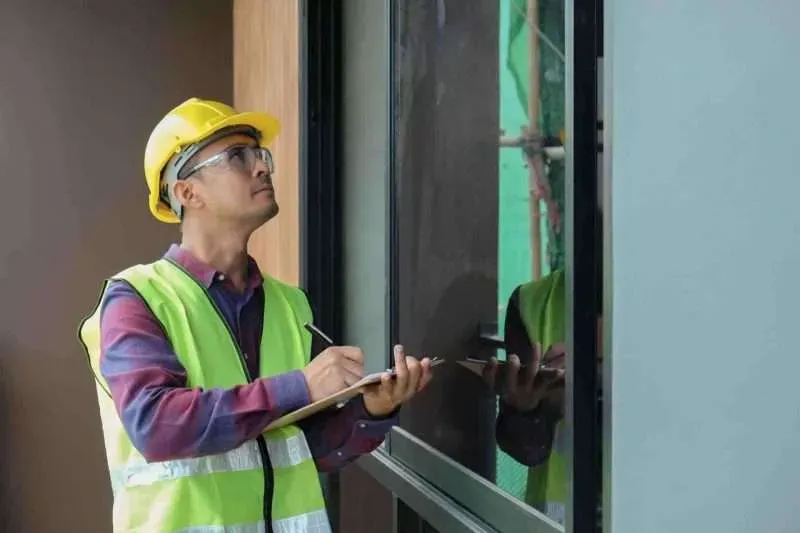
What a Building Survey IsA building survey is a professional, non-invasive inspection of a resale property carried out before purchase. An independent architect or technical inspector works through the property systematically, assessing its visible condition, identifying defects, and flagging anything that might cause problems after you’ve signed.
The findings go into a structured report that’s yours to use however you need, whether that’s to renegotiate the price, budget for repairs, request fixes, or in some cases, decide not to proceed at all.
What I Look For Before the SurveyThe thing with resales is that each client approaches them differently. Some come to feel the place out, some arrive sceptical, some optimistically. That’s fine. My job in the room is different.
As a buyer’s agent, my job is to ask the hard questions and highlight the things that look negative, even when nobody wants to hear it. I haven’t previewed most of the homes I walk clients through. That’s not unusual. Listing agents know their listings, and pre-visits aren’t always possible or welcomed. On higher budgets I make a point of seeing a property before bringing a client, but it’s not the norm. So more often than not, I’m finding things out at the same time the client is.
I walk each room with the client, asking questions on their behalf. Why are the vendors selling. How long has it been on the market. Who are the neighbours. What are the community fees. Does it include parking and storage. Is it sold furnished. What’s the realistic negotiation room. I mostly know the answers already, but I stopped assuming clients do a long time ago. They hear it in the background while they’re still exploring the space, and it gives them context.
At the same time I’m looking for things that don’t belong in the sales pitch. Individual air conditioning units or central. Load-bearing walls and what that means if someone wants to open up the layout. How far the water connection sits if the kitchen needs to move. What’s outside and around the building, a children’s park that’s quiet on a Tuesday morning but not on a Saturday afternoon, future development land nearby, the list goes on.
And then the ones that matter most for this conversation. Smell of damp. A room that’s been freshly repainted in one specific corner. Mold around window frames. Cracks that have been filled but not quite hidden.
I can build a picture, but I’m not a professional, and I know the limits of what I’m looking at. That’s where the professionals come in.
Why I Started Bringing Architects on ViewingsThere was a beachfront complex on the New Golden Mile, built in the 1970s, that I showed more than once during my earlier years. By the second time, I already knew the building had recurring humidity and plumbing problems. When another client asked to see an apartment there, and after advising against it to no avail because it was where they wanted to live, I already knew to prepare.
I arranged for a technical architect and a plumber to join us on the day. The reason was practical. The property was tenanted, access was limited, and the clients weren’t going to be around long enough to come back for a second look. Nobody was thinking about a subject-to-survey contract. If we were going to find out what we were dealing with, that viewing was the window.
That was a turning point for me. I could see how much was trying to be hidden, and how much some selling agents tried to steer the conversation away from it. Though in fairness, the majority of listing agents I dealt with back then genuinely didn’t know the problems existed, because the vendor chose not to tell them. Which, as far as it goes, is no bueno for everyone involved.
I started treating it as standard practice for anything older or anything where something felt slightly off. Not because I expected disaster every time. Just because finding out before the client signs is always better than finding out two months later when they move in.
To this day I haven’t had a serious hidden defect issue on a resale. Minor things, yes. But nothing that wasn’t caught or managed before it became the client’s problem.
A viewing with a professional in tow is one thing. A formal survey is a step further, and in many cases the right one. What I can arrange on a viewing day is a second set of trained eyes. What a survey gives you is a documented, structured report you can actually use, to negotiate, to plan, to protect yourself legally if something surfaces later. Those are two different things, and for the right property, both are worth doing.
What a Professional Survey CoversA building survey is a detailed review of all visible and accessible areas of the property. This typically includes:
- Structural elements, assessed visually
- Walls, ceilings, and floors
- Doors and windows, including alignment, operation, and sealing
- Kitchen and bathrooms
- Visible plumbing
- Electrical outlets, basic checks
- Air conditioning, basic operation
- Exterior areas including terraces and facades
It’s non-invasive. No opening up walls, no destructive testing. But an experienced inspector reads what the surface is telling them. A damp patch, a fresh skim coat in one corner, a tile that sounds hollow when tapped. The survey won’t tell you everything, but it will tell you enough to make a decision.
What It Doesn’t CoverA building survey is not a full technical audit of the property’s systems. Concealed installations, detailed system testing, exact remaining lifespan of materials, none of that is in scope.
If something in the report raises a concern that needs a deeper look, that’s a separate conversation with a specialist. Think of the survey as a reliable first pass. It catches the majority of what matters and tells you where to investigate further if needed.
The Manilva VillaA client of mine was looking at a villa in Manilva. On the exterior, running the entire length of one side of the building, there was a horizontal crack about 5 meters long.
It looked bad. For my untrained eye, it looked seriously bad. Fortunately my client worked in construction and didn’t panic. He saw an opportunity instead.
Before we started any price negotiation, we commissioned Thomas from ArquiStruct to carry out a full survey. A few days later the report came back. The crack was settling, which although it looks alarming, is a normal characteristic of any building over time. The fix was cosmetic. We had an estimated repair cost, a professional assessment in writing, and complete clarity on what we were actually dealing with.
We made an offer well below asking price, citing the condition of the building as the reason. We didn’t disclose what the survey had found, or how minor the actual issue turned out to be. The vendors didn’t know the severity. The discount we ended up achieving ran into several hundred thousand euros. The survey cost a fraction of that.
The Legal Side: Vicios OcultosSpanish law gives buyers 6 months from handover to file a claim for hidden defects, vicios ocultos, under Article 1490 of the Civil Code. After that window closes the right to claim expires, unless fraud is proven.
The catch is that courts hold buyers to a higher standard if they had reason to investigate and didn’t. If there were visible indicators during the viewing that something warranted a closer look, a judge may rule the defect wasn’t truly hidden. A survey report dated before purchase changes that. It demonstrates you carried out due diligence. If something was genuinely concealed and surfaces later, you’re in a much stronger legal position than if you simply hoped for the best.
There are laws in Spain that protect buyers, but it’s always better to avoid the problem with checks before than to deal with it through contracts after.
Two Other Things Worth CheckingA survey covers the physical condition of the property. It doesn’t cover the paperwork around it.
Community debts in Spain follow the property, not the seller. Unpaid fees or outstanding charges become yours the moment you complete. Before signing anything, request a certificate confirming there’s no outstanding community debt.
This is the part the lawyers check during due diligence
For older buildings, ask for the ITE, the Inspección Técnica de Edificios. Buildings above a certain age are required to have a technical inspection on record. If it hasn’t been done, or if it flagged problems that were never resolved, that’s something you want to know before purchase, not after.
Is It Common? Who Pays?Before you ask, no. It’s not common. A small percentage of resale buyers on the Costa del Sol commission a formal survey before purchase. Most rely on viewings, a second visit, and a general read of the property.
I recommend it whenever there’s a reason to suspect something. An older building. Visible indicators. A price that seems low relative to the market. Any situation where getting back in before signing will be difficult. On higher-value purchases it makes sense regardless of whether anything looks wrong.
The buyers are the ones who stand for the cost. For a standard apartment expect somewhere around €400 to €800 depending on size. For a villa, more. Relative to the purchase price it’s not a significant number, and the Manilva case is a decent illustration of what it can return.
Final ThoughtsResale properties on the Costa del Sol can represent real value, but they come with a different set of risks to new builds. No warranty period, no defect liability period, and a seller who has lived with the property long enough to know exactly what they’re not mentioning.
A survey won’t remove all uncertainty. But it removes the uncertainty that matters most.
If you want a recommendation for a trusted technical architect, Thomas la Cour Bidstrup at ArquiStruct carries out these inspections across the Costa del Sol and is someone I’ve worked with directly. You can reach him at arquistruct.com.












Comments (1)
Alexander von Basten · 3 months ago
**Are new developments in Sotogrande actually worth the higher prices?**\r\n\r\nI’ve been looking at properties in Sotogrande and trying to understand whether buying a new development really makes more sense than an established resale property.\r\n\r\nFrom what I can see, the new builds obviously offer modern design, better energy efficiency and attractive facilities, but prices can be considerably higher.\r\n\r\nI found this guide while researching the different options:\r\n\r\nhttps://property-sotogrande.com/new-developments-sotogrande/\r\n\r\nFor people who actually know the Sotogrande market, what would you choose today: a new development or an older resale property in a better-established location?\r\n\r\nInterested to hear some genuine experiences and opinions.