


The First Footprints
Most visitors know Marbella for its surface. They see Puerto Banús glittering with yachts, the Ferraris growling along the Golden Mile, and the restaurants filled until late into the night. It is all true, but it is also the last page of a very long story. The real heart of Marbella lies beneath, written into stone and soil, carried on the salt of the sea.
The same mountains that frame Marbella today stood here long before there was a name. They watched the bay curve against the sea, silent witnesses as people arrived from across the water. Some came to trade, some to fight, some to build. Each wave left something behind, and Marbella became a tapestry of civilisations.
Before the Phoenicians there were even older peoples along this coast. The Iberians and the Tartessians left only faint traces in caves and burial sites in the mountains. They are shadows more than stories, but they remind us that life here began long before anyone wrote it down.
The first we can name with certainty were the Phoenicians. They sailed west from the eastern Mediterranean in narrow wooden ships, searching for safe waters and new trade. Along this shoreline they built small outposts and fish salting workshops. Archaeologists have uncovered remnants of these factories, places where garum, the strong sauce of empires, was made. The Carthaginians came after them, using the same routes and anchoring the same bays.
Stand today near Río Verde or Guadalmina and you are on ground where their presence has been proven. The ships are long gone, but the ruins in the soil and the salt in the air tell us they were here, trading and working centuries before Marbella had its name.
Rome Arrives With Order
Then came Rome, and for the first time Marbella’s life becomes clear. The Romans brought roads, villas, baths, and order. They saw this coast not as wilderness but as part of their world.
At Río Verde, on the edge of today’s Golden Mile, they built a villa with mosaics that still survive. The patterns are not grand myths or battle scenes but kitchen utensils: ladles, jars, pans. Two thousand years later it feels intimate, as if the family who lived there had only stepped outside for a moment.
Further west, near San Pedro, stands the basilica of Vega del Mar, one of the oldest Christian sites in Spain. Near Guadalmina lie the ruins of Roman baths, once filled with steam and laughter. Inside Puente Romano resort is the stone bridge that gave it its name, still carrying the weight of centuries.
Rome brought olive oil, wine, and fish paste. Amphorae from these coasts travelled across the empire. Marbella was not a capital, but it was connected, part of the Roman rhythm.
The Medina Of Marbiliya
Rome faded, and in its place rose a new world. The Moors crossed from North Africa and gave the town its first true identity. They called it Marbiliya.
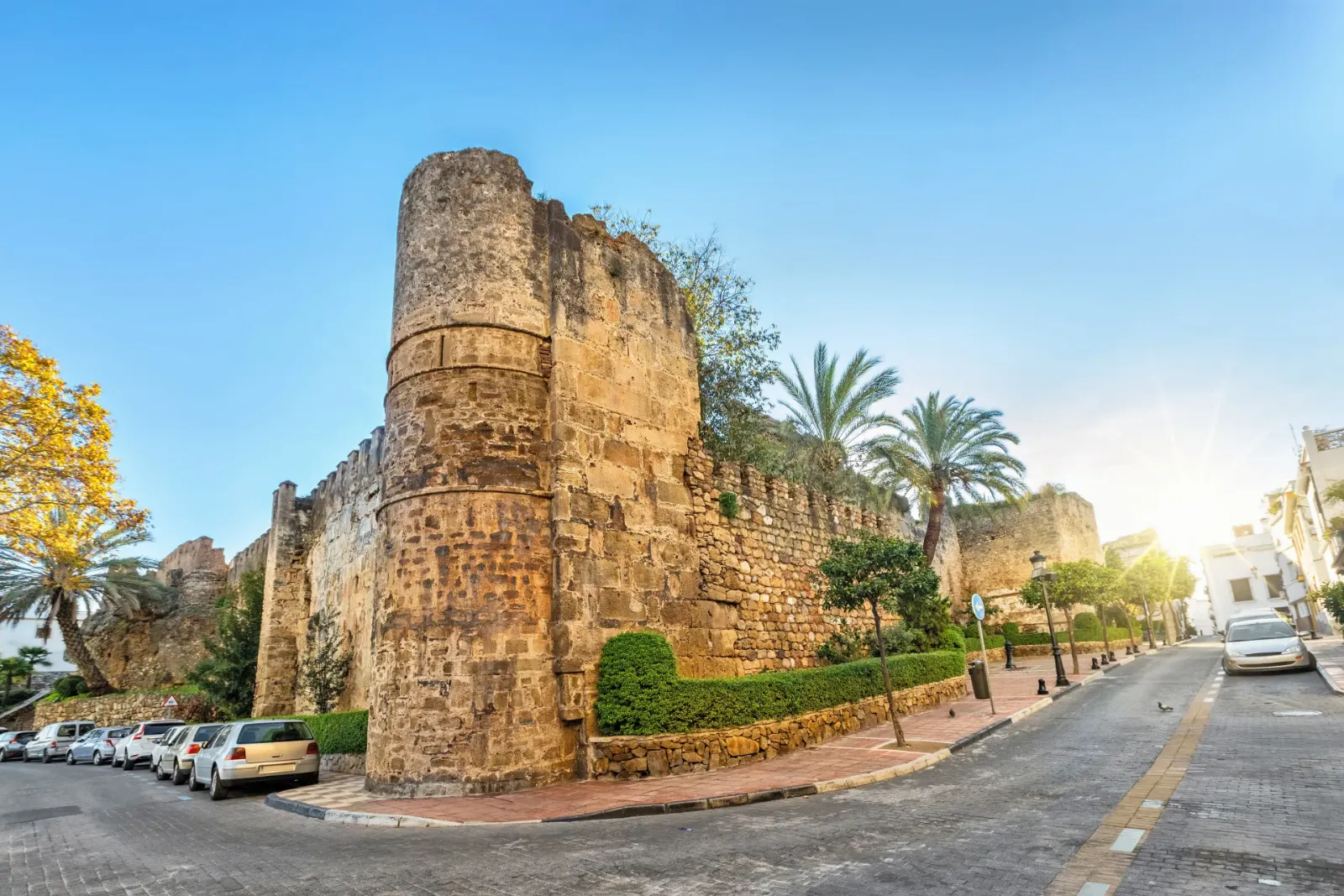
They built walls and towers around their medina, ten of them at least, and some still stand in the old town today. Walk those streets and you are still inside their design. The alleys twist and bend to slow down invaders, forcing them into single file. At the same time, the shade kept the heat away. In summer the sun could not easily reach the stone, and the streets remained cool.
The castle walls are more than ruins. If you look closely, you can still see grooves carved into some of the stones, marks left where guards sharpened their swords and spears for years. These walls once rang with the sound of steel.
The Moors shaped more than the town. They changed the land itself with irrigation channels that made new crops possible. Citrus groves and olives grew where the soil had been dry. They turned Marbella into a fertile corner where life could flourish despite the heat.
The Christian Reconquest
In 1485 the Catholic Monarchs took Marbella. The walls of Marbiliya were strong, but the town fell and the old Moorish medina changed hands. To mark their victory the Christians wanted a new centre, one that broke with the narrow Moorish layout. They cleared entire blocks of houses and opened a wide square in the middle of town. That square became Plaza de los Naranjos.
It was not only symbolic but practical. Around the square they placed the main buildings of power: the town hall, the governor’s house, and a small chapel. The chapel still stands, and if you look carefully you notice it sits slightly off centre. That is because it was built on the foundations of the former mosque, which had been aligned toward Mecca. Even in triumph, the new rulers could not erase the orientation of the old faith.
The square itself tells you everything about the change. Where the Moorish streets were narrow and shaded, the plaza was open, proud, and filled with light. It was a public statement, a declaration that the old order had ended and a new one had begun.
But beyond the square, life settled back into something simpler. Marbella became a small fishing and farming town again. The villagers lived with the sea and the soil, but also with the threat of raiders from North Africa. That is why towers were raised along the beaches, watchful eyes of stone that still stand today, leaning toward the horizon.
Iron And Sugarcane
The nineteenth century transformed Marbella again. High in the Sierra Blanca, iron was discovered. Two great furnaces, La Concepción and El Ángel, were built beside the Río Verde. They glowed red against the night sky, smoke and sparks rising where palm trees now sway. For a short time Marbella produced most of the iron in Spain.
The ore came down from the Ojén mines to be smelted at the furnaces, and from there it was carried along a narrow railway that cut right through Marbella town. The line ran where today you stroll by the Salvador Dalí statues and into the Parque de la Alameda, but in those days it did not end at cafés and fountains. It continued into the sea.
Click here to learn more about historic locations you should visit in Marbella!
Inside the water stood a great loading tower, a wooden and iron structure that reached out over the waves. Wagons rolled out above the bay and tipped their cargo straight into waiting ships. Further east, another tower was built, the Torre del Cable, which still stands offshore as a rusted monument to that time.
Walk the paseo today and it is hard to picture, but where you now see children playing and people walking in the shade there was once the clatter of wagons and the glow of furnaces. For a brief moment, Marbella was not a resort but one of the industrial hearts of Spain.
While iron lit the skies of Marbella, the flatlands further west were turned into the agricultural colony of San Pedro Alcántara in 1860. Fields of sugarcane stretched toward the sea, later replaced by beet. A mill and workshops stood at its centre, driving the rhythm of the harvest.
For a time the colony thrived, but falling prices and stronger competition ended the project. The mill went quiet, the plantations disappeared, and the land was gradually taken over by farms and later by the growing town of San Pedro.
War And Ruin
The Spanish Civil War deepened Marbella’s poverty. Battles and reprisals scarred the coast. Villas and estates were abandoned. The town dwindled, forgotten, its people struggling just to survive. By the 1940s, the old town counted only around 900 inhabitants. Chickens scratched in courtyards, and life had narrowed to its simplest form.
A Picnic That Changed Everything
Then fate intervened. Prince Alfonso von Hohenlohe stopped here while driving along the coast. Beneath the pines he unpacked a picnic, and something in the air convinced him this forgotten town had a future.
In 1954 he opened the Marbella Club, a former finca turned into a small hotel. It was elegant without being cold, welcoming without being ordinary. Friends came, then friends of friends. Soon the great names of the world arrived… Audrey Hepburn, Brigitte Bardot, Sean Connery, Aristotle Onassis. Marbella was reborn, not through iron or sugar, but through charm.
The Golden Mile And Puerto Banús
From the Marbella Club grew the Golden Mile. In just a few short decades villas and gardens spread along the coast toward San Pedro, each more ambitious than the last. Hotels like Puente Romano rose, carrying the name of the old Roman bridge into a new age of leisure. This stretch of coast, once fields and quiet paths, became Marbella’s crown and one of the most famous addresses on the Mediterranean.
Then, in 1970, José Banús unveiled his new marina. Puerto Banús opened with fireworks, music, and celebrities flown in from across the world. The farmland that locals still remember walking across as children was suddenly a harbour lined with boutiques and yachts. Marbella was no longer a retreat. It was a stage.
By the 1980s King Fahd of Saudi Arabia had built a vast palace nearby, a city within a city. In the space of a single generation, Marbella had become a crossroads of the world’s wealth.
Boom And Corruption
The 1980s and 1990s were years of unstoppable growth. Golf courses spread across the hills. Apartments and villas multiplied. At the centre stood Jesús Gil, mayor and football president, as flamboyant as he was controversial. Roads, urbanisations, and hotels appeared almost overnight. Much of it was built in ways that would never pass today’s checks, but without that frenzy many of Marbella’s landmarks might not exist at all.
In 2006 Operation Malaya erupted, uncovering one of Spain’s largest corruption cases. The city council was dissolved and Madrid took direct control. Marbella was once again on the front pages of the world, not for its glamour but for its scandals. Yet even through the chaos, the city had already secured its place on the global map.
Marbella Today
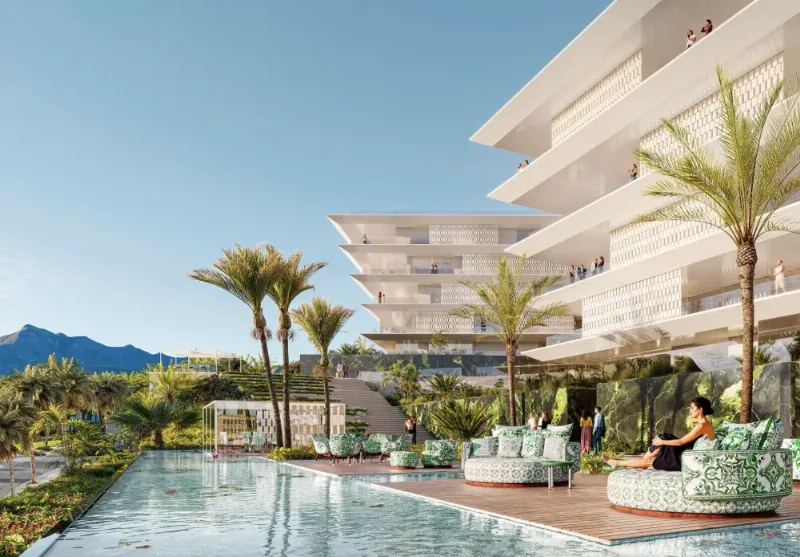
And still, Marbella endures. After the financial crisis it rose again with a new face. Today it is not only a resort but a hub of global luxury. The world’s leading fashion houses and design brands have planted their flags here, with more arriving each year. International hotel groups are building new projects. Middle Eastern investors and family offices have fixed their gaze on the coast. Billionaires now call it home.
The pandemic changed everything. During Covid, people realised they no longer needed to stay in cold northern homes. They came south searching for warmth, space, and a healthier way of life. Marbella offered not only sunshine but security for their money, with property values holding strong and a cost of living far lower than London, Paris, or Stockholm. New visa schemes opened the doors wider, and suddenly Marbella was not just a holiday escape but a permanent choice.
In 2024 Forbes named Marbella the Destination of the Year, sealing what locals already knew. What was farmland in living memory is now one of the most desirable property markets in Europe. This is no longer just a place to visit for a few weeks. It is where people settle, raise families, and build lives.
Marbella today is one of the most international towns in Spain. More than half of its residents were born elsewhere. Walk the streets and you hear every language of Europe and beyond. Entrepreneurs connect here to global networks that include Apple, Amazon, Google, Microsoft, and countless others. Marbella has become as global as it is local, as modern as it is ancient.
And as the sun drops behind La Concha and the lights of Puerto Banús shimmer across the bay, the view stretches south to Gibraltar and even to Africa beyond. Every empire and every era has looked across this same horizon. Marbella’s story has always been about reinvention, and its latest chapter is only beginning.








Comments (0)
No comments yet. Yours can be the first.